A Maasai Mara safari is one of the most extraordinary wildlife experiences on earth — but the difference between a good trip and a truly unforgettable one almost always comes down to planning. The reserve itself will rarely disappoint. What separates the travellers who leave speechless from those who feel they missed out is almost always a handful of decisions made before they ever set foot in Kenya.
This guide covers the ten most important things to know before visiting the Maasai Mara for the first time: when to go, how long to stay, what to pack, how to get the most from your game drives, what the park rules actually are, which optional experiences are worth budgeting for, and how to choose a safari package that genuinely matches your travel style.
Whether you’re planning a 3-day fly-in escape or a 7-day Kenya circuit, these tips will help you arrive prepared, confident, and ready to make the most of every hour in the Mara.
Planning your first Maasai Mara safari? Explore our Maasai Mara safari packages or request a free custom quote from our team.
Maasai Mara Safari Tips at a Glance
| Tip | Why It Matters |
| Choose the right season | Timing determines what wildlife you’ll see and how much you pay |
| Stay at least 3–4 nights | More days = more game drives = dramatically better wildlife chances |
| Book peak season early | July–October lodges fill 9–18 months in advance |
| Pack neutral-coloured clothing | Bright colours disturb animals and mark you as a tourist |
| Always carry binoculars | Transforms distant sightings into intimate wildlife moments |
| Start game drives at dawn | Predators are most active and light is best in early morning |
| Trust your driver-guide completely | Their instincts and knowledge are your single biggest wildlife advantage |
| Follow all park rules | Violations carry on-the-spot fines and can cut your game drive short |
| Budget for optional extras | Balloon safari, tips, and village visits are typically not included |
| Manage wildlife expectations honestly | The Mara is exceptional — but it’s not a zoo, and that’s the whole point |
Tip 1: Choose the Best Time to Visit Maasai Mara
The single most impactful planning decision you’ll make is when to travel. The Maasai Mara is worth visiting in every month of the year — but what you experience changes significantly depending on the season, and so does the price.
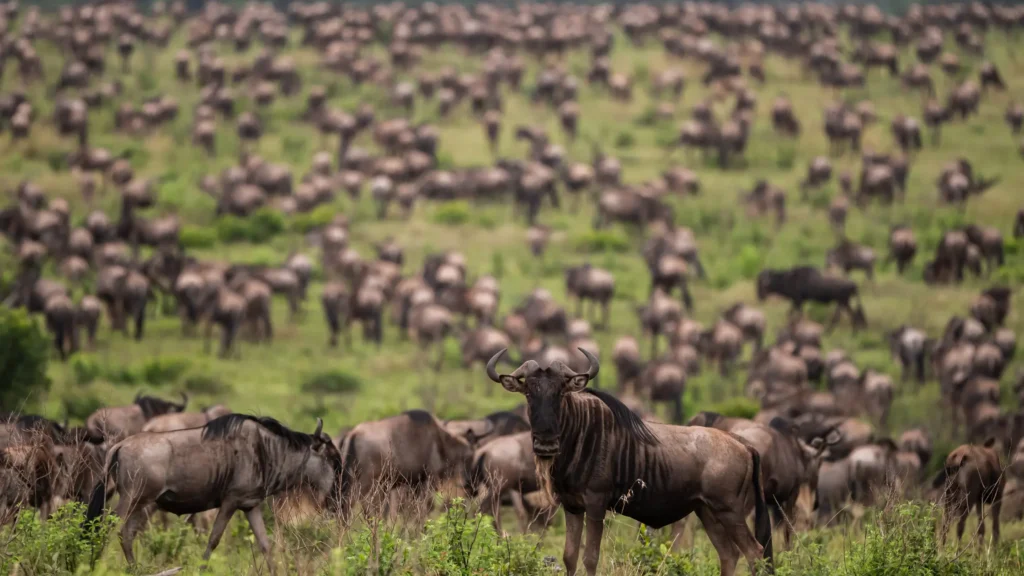
July to October — Great Migration and peak season: This is the most sought-after window. The Great Wildebeest Migration arrives in the Mara from late July, and the dramatic Mara River crossings — wildebeest launching themselves into crocodile-filled water in thundering waves — peak through August and September. Wildlife is abundant and highly visible on thinned-out dry-season grass. Park fees are at their highest ($200/day for non-residents), accommodation rates are at a premium, and the best lodges book out far in advance.
June — dry season without peak prices: June is one of the most underrated months. Conditions are already dry, vegetation is thinning, wildlife is highly visible, and prices haven’t yet hit peak levels. The first wildebeest herds are beginning their northward movement.
January to February — the most underrated months: After the short rains, the Mara settles into a warm, largely dry period with excellent predator activity (calving season brings intense big-cat action), far fewer vehicles on game drives, and accommodation at mid-range pricing. Many professional guides and repeat Mara visitors consider this their favourite time of year.
March to May — green season and budget travel: The long rains bring lush, photogenic landscapes, dramatically quieter game drives, and prices 20–40% below peak rates. Wildlife is still present, though taller vegetation makes spotting slightly harder. Some camps close in April and May.
November to December — short rains and birding: The landscape greens up again, migrating birds from Europe and Asia arrive (over 500 recorded species in the Mara), and prices ease. December’s festive period sees a spike in visitors around Christmas and New Year.
For a complete month-by-month breakdown, read our detailed Best Time to Visit Maasai Mara guide.
Also see our Great Migration Viewing and Migration Safari pages.
Tip 2: Spend Enough Time in the Mara
This is the tip most first-time visitors wish they had taken more seriously. The Maasai Mara is vast — nearly 1,510 square kilometres in the main reserve alone, surrounded by an even larger network of private conservancies. Three days feels long enough until you’re in the middle of it, watching a lioness hunt at dawn, and realising you’re leaving tomorrow.
For most first-time visitors, 3 nights (4 days) is the ideal minimum. This gives you arrival-day game drives, two full days of morning and afternoon drives, and a morning drive on departure day. If witnessing river crossings during the Great Migration is a priority, aim for 4 to 5 nights — crossings don’t happen on schedule, and every extra day is another opportunity to be at the right crossing point at the right moment.
| Duration | Best For |
| 2 nights (3 days) | Short trips — achievable but leaves you wanting more |
| 3 nights (4 days) | The recommended minimum for most first-time visitors |
| 4–5 nights | Best for Great Migration and river crossing chances |
| 6+ nights | Photography, luxury, extended multi-park Kenya itineraries |
Not sure how many days is right for you? Talk to our team — we’ll match your schedule to the right itinerary.
Relevant packages:
- 3-Day Maasai Mara Fly-In Safari
- 4-Day Maasai Mara & Lake Nakuru Safari
- 6-Day Maasai Mara Migration Safari
Tip 3: Choose the Right Safari Vehicle
Your game drive vehicle matters more than most travellers realise going in. It affects how you photograph, how comfortable you are during long drives, and how well you access the Mara’s diverse terrain across different seasons.
4×4 Safari Land Cruiser

The gold standard for Maasai Mara game drives. A Toyota Land Cruiser with a pop-up roof hatch seats 6–7 passengers (6 is ideal), has excellent ground clearance, handles the Mara’s notorious wet-season mud roads with confidence, and gives photographers the height advantage and stability they need for sharp shots. All Imela Tours & Travel safaris use purpose-built 4×4 safari Land Cruisers as standard.
Safari Minivan (Pop-Top Van)
More common in group and budget packages, safari vans are lighter and slightly less capable on rough terrain, but still perfectly suitable for Maasai Mara game drives in dry season. Window seats matter more in a van, so confirm your seating arrangement if you’re booking a shared group safari.
For Maasai Mara, a 4×4 Land Cruiser is always the recommended choice — particularly during the rainy season (March–May, November), when certain tracks and river crossings become impassable for lower-clearance vehicles. In private conservancies surrounding the reserve, 4×4 capability is essential for off-road access, which is where the most exclusive wildlife encounters often happen.
See our Private Guided Safari and Budget Safari pages for vehicle options at different price tiers.
Tip 4: Pack Smart — Bring What You Need, Nothing More
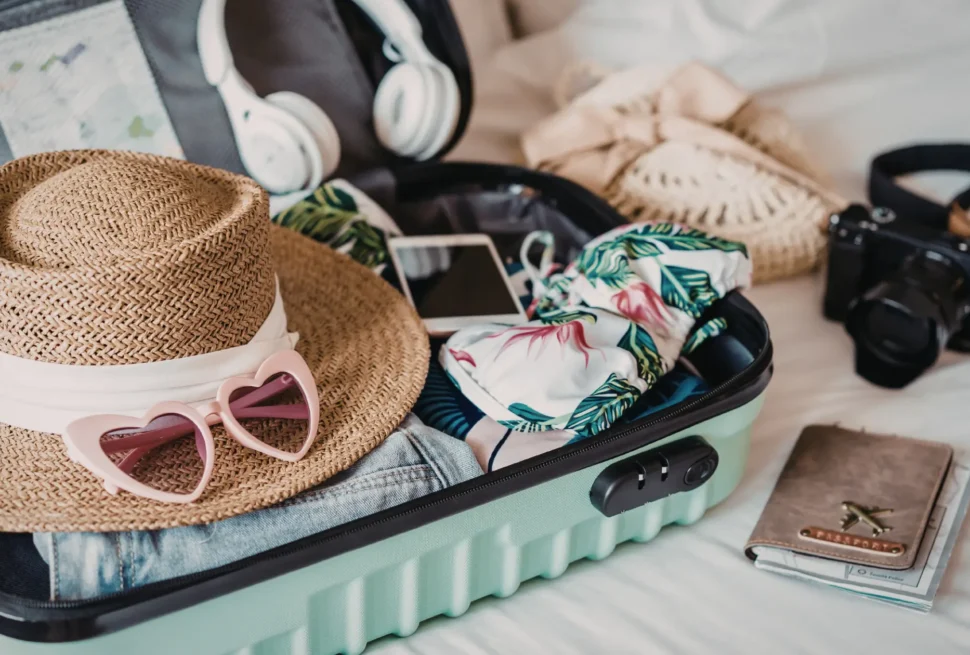
Packing for a Maasai Mara safari is a specific art, and getting it right pays dividends across every game drive. If you’re travelling by fly-in bush flight, there is a strict 15 kg soft bag luggage limit per person — hard-sided suitcases are not permitted on bush planes. Even on road safaris, overpacking means less space in the vehicle and less comfort during long game drives.
The Maasai Mara Safari Packing Checklist
Clothing (pack light, aim for neutral tones):
- 3–4 changes of lightweight, breathable clothing in khaki, beige, olive, brown, or grey
- 1–2 warm fleece or light jacket (mornings and evenings are genuinely cold — often below 12°C/54°F in June–August)
- Long-sleeve shirts (sun and insect protection during afternoon drives)
- Comfortable, closed walking shoes or lightweight boots
- Hat with a wide brim or safari cap (essential for all-day sun exposure)
- Sunglasses
Safari essentials:
- Binoculars (minimum 8×42 magnification — transformative for wildlife viewing)
- Camera with a telephoto zoom lens (70–300mm minimum; 100–500mm ideal for wildlife)
- Extra memory cards and camera batteries (no power outlets in the bush)
- Portable phone/battery charger
- Reusable water bottle (many camps are reducing single-use plastic)
Health and comfort:
- High-SPF sunscreen
- Insect repellent (DEET-based; malaria is present in most safari areas)
- Personal medication including any prescription drugs — bring more than you need
- Anti-malarial tablets (start before departure; consult your travel health clinic at least 6 weeks early)
- Small personal first aid kit
- Hand sanitiser and wet wipes for game drives
Documents and admin:
- Physical passport (original — required at Wilson Airport for fly-in safari travellers; photocopies rejected)
- Kenya eTA approval (apply at etakenya.go.ke before travel)
- Travel insurance documents (your medical evacuation details should be easily accessible)
What NOT to Pack
- Bright neon or white clothing — attracts insects and disturbs wildlife
- Camouflage patterns — illegal to wear in Kenya (reserved for military and law enforcement)
- Strong perfumes or fragrances — alert wildlife and attract insects
- Hard-sided suitcases — banned on bush flights; impractical on road safaris
- Excessive valuables — leave jewellery and expensive watches at home
For photography-specific kit recommendations, see our Wildlife Photography Safaris page.
Tip 5: Dress for Layering — The Mara Is Colder Than You Think

This is one of the most consistently underestimated aspects of a Maasai Mara safari, especially for visitors from tropical countries or those imagining “Africa” as uniformly hot.
The Maasai Mara sits at an altitude of 1,500–1,900 metres (4,900–6,200 feet) above sea level. Dawn game drives — which typically begin around 6:00–6:30am — are conducted in open-top vehicles in conditions that can be 10–12°C (50–54°F) in the dry season months of June to August. Wind chill at speed makes this feel colder. Many first-time visitors arrive in light clothing and spend their best wildlife-viewing hours shivering rather than watching.
The layering system that works:
- Base layer: Lightweight long-sleeve top
- Mid layer: Light fleece or wool jumper
- Outer layer: Windproof jacket or gilet
By 9–10am, the sun warms the vehicle rapidly, and layers come off one by one. By afternoon game drives (typically 4–6:30pm), temperatures drop again and layering up for the drive back is important.
Stick to neutral colours throughout — khaki, olive, stone, beige, or brown. These tones blend naturally into the savannah environment, avoid startling wildlife, and are practical in dusty conditions. Leave anything white at your lodge.
Tip 6: Know and Follow the Park Rules
The Maasai Mara has a strict code of conduct enforced by rangers, and violations result in on-the-spot fines. Beyond the fines, these rules exist to protect the wildlife and ecosystem that makes the Mara worth visiting. A good driver-guide will brief you before your first game drive — pay attention.
Key park rules every visitor should know:
No off-road driving in the main reserve. Vehicles must stay on designated tracks at all times within the Maasai Mara National Reserve. Off-road driving is strictly prohibited and carries fines of KES 10,000+. Note: in private conservancies surrounding the reserve (Mara North, Olare Motorogi, Naboisho, etc.), off-road driving is permitted — one of the key advantages of conservancy-based accommodation.
Speed limit: 50 km/h maximum. Enforced to protect wildlife that crosses tracks unpredictably. Rangers monitor compliance actively.
Park operating hours: 6:00am to 6:00pm. The Maasai Mara operates on a 12-hour ticket validity system with a hard 6:00pm expiry regardless of entry time. If you enter at 2pm, your ticket expires at 6pm — not 24 hours later. Exiting after 6pm triggers additional charges. Your operator will plan your itinerary to maximise your $100 or $200 daily park fee.
No getting out of the vehicle — except at designated viewpoints and picnic sites. In the wild sections of the reserve, you remain in the vehicle during game drives.
No noise during game drives. Phones on silent. No music. No raised voices near animals. This isn’t just about respect — noise genuinely disrupts wildlife behaviour and reduces sighting quality for everyone.
Do not feed, touch, or disturb wildlife. Feeding any animal is illegal and dangerous. Keep a minimum safe distance of 20–25 metres from wildlife unless an animal approaches your vehicle on its own.
10-minute etiquette rule at big sightings. When large numbers of vehicles are present at a sighting, a 10-minute rotation is expected so other vehicles can access the spot. Your guide will manage this — it’s part of their job.
Night game drives are prohibited in the main reserve. This rule does not apply in private conservancies, which offer night drives as one of their key advantages. If night drives are on your wish list, a conservancy-based camp is essential.
Tip 7: Start Your Game Drives at Dawn — Every Single Day
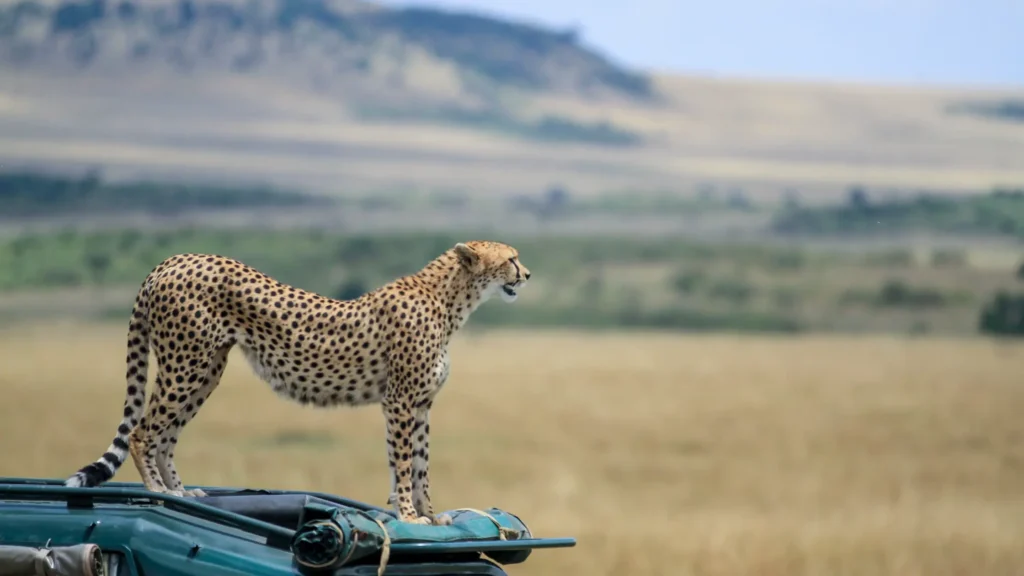
This is the tip that separates the travellers who see three lions on a distant hillside from the ones who watch a full pride hunt at 30 metres. The Maasai Mara’s most dramatic wildlife moments happen in the first two hours after sunrise — and the photographic conditions during that golden window are unmatched at any other time of day.
Why early morning game drives are essential:
- Predator activity peaks at dawn. Lions, leopards, and cheetahs are nocturnal and crepuscular hunters — most active at night and at the edges of darkness. Dawn is when you find them finishing a hunt, moving across open ground, or gathered around a kill. An hour after sunrise, many big cats will be resting in shade and far less visible.
- Golden photography light. The hour after sunrise produces soft, directional, warm light that makes every photograph look dramatically better than the harsh midday sun. Wildlife photographers specifically plan their entire days around this window.
- Animals are still moving. As temperatures rise through the morning, wildlife gradually moves into shade and becomes less active. The early hours are when herds are crossing, predators are hunting, and the plains are most alive.
- Fewer vehicles at prime spots. First vehicles out at 6am often have key sighting locations — river crossing points, lion territories, cheetah open-ground areas — entirely to themselves before the crowds arrive.
Game drives in the Maasai Mara typically follow this structure:
- Morning drive: 6:00–6:30am departure, returning by 10:00–11:00am
- Afternoon drive: 3:30–4:00pm departure, returning by 6:00–6:30pm (park closing)
- Full-day drive: Available during peak migration season, allowing continuous time in the reserve with a packed picnic lunch
The afternoon drive has its own rewards — the quality of light from 4:30pm onwards is excellent for photography, lions often become active again as temperatures cool, and the drive back at sunset is genuinely magical. But if you have to choose between sleeping in and the dawn drive, there is never a question: set the alarm.
See our Game Drives & Wildlife Safaris activity page for more detail.
Tip 8: Trust Your Safari Guide — They Are Your Greatest Asset
Your driver-guide is not a taxi driver with wildlife knowledge. A professional Maasai Mara safari guide is a trained naturalist, a tracker, an expert in animal behaviour, a linguist, and often someone who has spent more days in the Mara than most wildlife documentarians. The quality of your guide has more impact on your safari experience than almost any other factor — more than your lodge tier, your vehicle, or even the season.
What a great guide does that you cannot replicate independently:
- Reads the landscape. Experienced guides notice bent grass, bird alarm calls, vultures circling at a specific angle, or a subtle shift in zebra behaviour that signals a predator nearby — often before any animal is visible to the naked eye.
- Uses the radio network. Guides in the Mara communicate with each other constantly via two-way radio. When another guide spots a cheetah kill at the far end of the reserve, yours will hear about it and can decide whether to drive over. This network is one of the primary tools that turns a good sighting into an extraordinary one.
- Manages wildlife interaction safely. When to cut the engine, when to reverse slowly, how close to stop, which direction to position the vehicle for the best photography angle — all of these judgments come from years of experience and are applied intuitively.
- Explains what you’re seeing. A pride of lions at a kill is remarkable on its own. A guide who tells you which individuals are dominant, which cubs are from which mother, and how this kill fits into the territorial patterns of the surrounding area transforms the sighting into a story.
The single most valuable thing you can do on a Maasai Mara safari is to tell your guide what you most want to see, ask questions constantly, and follow their instructions without hesitation. When a guide says to stay seated, stay seated. When they cut the engine and signal for silence, be silent. The moments that follow that silence are often the ones that people describe decades later.
At Imela Tours & Travel, every driver-guide is licensed by the Kenya Professional Safari Guides Association (KPSGA) and has extensive field experience in the Maasai Mara ecosystem. Learn more about our team.
Tip 9: Budget for Optional Experiences
Most standard Kenya safari packages are priced to include the essentials — accommodation, all meals, game drives, park fees, and ground transport. Several of the Maasai Mara’s most memorable experiences are not included in the base package and need to be budgeted for separately. Plan for these in advance rather than discovering them on arrival.
🎈 Hot Air Balloon Safari — $450–$580 per person
The balloon safari is the Mara’s most iconic optional experience, and for many travellers it becomes the single most memorable moment of their entire Kenya trip. Here’s exactly what it involves:
You’re picked up from your lodge or camp at around 5:00–5:30am for a transfer across the dark plains to the launch site — often with wildlife encounters along the way (hyenas, lions, and leopards all move in the pre-dawn hours). You watch the massive balloon inflate by torchlight, climb into the basket before sunrise, and then lift silently into the Mara sky as the sun crests the horizon.
The flight lasts approximately one hour, covering 12–25 km depending on wind direction and speed. From 50–100 metres above the plains, the scale of the Mara becomes comprehensible in a way it never is from a vehicle — herds that seem large at ground level reveal themselves to stretch for kilometres. Elephant families, giraffe herds, hippos in the river, and — during migration season — the spreading mass of wildebeest are all visible below in extraordinary clarity.
Landing is followed by a champagne bush breakfast served in the wilderness, complete with hot food, fresh fruit, and sparkling wine or juice. The entire experience takes 4–5 hours from pickup to return.
Cost in 2026: Approximately $450–$580 per person for a standard shared balloon (up to 16 passengers). Balloon safaris operate year-round, weather permitting. They are particularly spectacular during the Great Migration season (July–October) and must be booked in advance — they regularly sell out during peak months.
Minimum age is typically 7–8 years (some operators require a minimum height of 1.2m). Children under 3 are not permitted.
👥 Maasai Village Visit — $20–$30 per person
The Maasai people have inhabited the land surrounding the Mara for centuries and have maintained many of their traditional practices alongside modern life. A village visit — called a manyatta visit — offers a genuine cultural experience: watching the traditional adumu jumping dance, seeing how the boma (homestead) is constructed from mud, dung, and acacia branches, and speaking with community members about their way of life. These visits directly support the community and are a meaningful addition to a wildlife-focused safari.
🌙 Night Game Drives — available in private conservancies
Night drives reveal an entirely different side of the Mara ecosystem — leopards returning from hunts, spotted hyenas at kills, civets, genets, bush babies, and owls all become visible after dark. Night game drives are not permitted in the main Maasai Mara National Reserve but are a standard included activity at many camps located in the surrounding private conservancies (Mara North, Olare Motorogi, Naboisho, etc.). If night drives matter to you, factor this into your accommodation choice.
🚶 Guided Bush Walks — available in private conservancies
Walking safaris with an armed ranger are an extraordinary experience — tracking wildlife on foot, reading the landscape at ground level, and gaining an entirely different sensory understanding of the bush. Like night drives, these are not available in the main reserve but are offered by many conservancy-based camps.
💰 Tips and Gratuities — budget approximately $150–$200 per person per week
Tips are genuinely important to the people who make your safari exceptional. Standard guideline:
- Driver-guide: $15–$20 per person per day
- Lodge/camp staff (pooled): $10–$15 per person per day
- Balloon crew: $10–$20 per person
Have small US dollar bills or a means of M-Pesa transfer (Kenya’s mobile money system) available.
Want to add a balloon safari or cultural village visit to your package? Contact our team and we’ll include it in your quote from the start.
See our Kenya Safari Cost Guide for a full breakdown of what’s typically included and excluded.
Tip 10: Choose the Right Safari Package for Your Travel Style
No two travellers want exactly the same thing from a Maasai Mara safari — and choosing a package that matches your real priorities is far more important than simply choosing the cheapest or the most expensive option.
| Traveller Type | Best Safari Option | Key Consideration |
| First-time visitor | 3–4 day classic Maasai Mara safari | Prioritise a strong guide over premium accommodation |
| Budget traveller | Shared road safari with group departure | Excellent value — wildlife is identical regardless of budget |
| Luxury traveller | Fly-in safari with conservancy camp | Night drives, walking safaris, private vehicle all included |
| Family with children | Private vehicle, family-friendly lodges | Flexibility over schedules and activities is essential |
| Wildlife photographer | 5–6 day extended stay, conservancy location | Off-road access, private vehicle, and dawn/dusk light |
| Great Migration traveller | 4–5 day July–October migration safari | River crossing chances improve significantly with more days |
| Honeymoon couple | Luxury fly-in Mara + Diani Beach extension | Wildlife + Indian Ocean coast; the classic Kenya honeymoon |
Relevant packages and trip types:
- Maasai Mara Safari Packages
- Flying Safari
- Family Safari
- Luxury Safari
- Budget Safari
- Tailor-Made Safari
- Private Guided Safari
Bonus Tip: Book Early — Especially for Peak Season
If you’re planning to travel between July and October, this is not optional advice — it is the most important logistical point of this entire guide. The best camps and lodges near the Mara River crossing points book out 9 to 18 months in advance for peak migration season. This is not marketing pressure — it’s simply the reality of a limited number of premium beds and an enormous global demand for the Great Migration experience.
Early booking also gives you:
- First choice of accommodation tier, location, and room type
- Better pricing (some properties hold early-booking rates)
- Flexibility to secure bush flight seats, which also fill quickly
- Peace of mind to plan the rest of your Kenya itinerary around your Mara dates
For travel in January–June and November, 3–6 months is generally sufficient, though booking earlier is always better than scrambling.
Travelling during migration season? Request your Maasai Mara safari quote today and we’ll check availability and secure the best options before they go.
Common Mistakes to Avoid on a Maasai Mara Safari
These are the errors we see most frequently among first-time visitors — all completely avoidable with a little forewarning:
Booking too late for migration season. If July–October is your travel window and you’re enquiring in May, you may find that the best options are already gone. Start planning 9–12 months ahead.
Choosing the cheapest package without checking what’s included. A package that appears cheap may not include park fees, game drives, or a 4×4 vehicle. Always request a full inclusions and exclusions list before booking.
Underestimating road travel time. Nairobi to the Maasai Mara is 5–6.5 hours depending on your lodge location and traffic conditions. On a 3-day road safari, this means arriving too late for a meaningful afternoon game drive on Day 1. A fly-in safari eliminates this entirely for a modest premium.
Not carrying warm layers. The single most common complaint from first-time Mara visitors who haven’t read their pre-departure notes. Dawn game drives are cold. Bring a fleece and a windproof outer layer regardless of what season you’re travelling in.
Packing a hard-sided suitcase for a fly-in safari. Bush planes operate with 15 kg soft-bag limits. Excess luggage and hard cases must be stored at Nairobi — factor this into your packing before you depart home.
Expecting guaranteed sightings. River crossings, leopard sightings, and cheetah hunts are all genuine possibilities in the Mara — but they’re not performances scheduled for your arrival. Multiple game drives over multiple days is how you give yourself the best possible chance. Patience is a safari skill.
Ignoring travel insurance. A medical evacuation from the Maasai Mara without cover can cost $3,000–$8,000 or more. This is non-negotiable.
Forgetting to tip. Your guide and lodge staff work extraordinarily hard to deliver an exceptional experience. Tipping is genuinely part of their expected income — budget $150–$200 per person per week and have small USD bills or M-Pesa available.
Wearing camouflage clothing. It is illegal to wear camouflage in Kenya — it is reserved for the military and police. Neutral earth tones serve the same practical purpose without the legal issue.
Final Thoughts: Make the Most of Your Maasai Mara Safari
A first Maasai Mara safari is a milestone travel experience — one of those rare trips that genuinely changes your sense of the world. The scale of the wildlife, the size of the sky, the silence between predator sightings, and the intensity of a river crossing witnessed at close range are all things that photographs and documentaries prepare you for but never quite capture.
To make the most of it:
- Match your dates to your goals — migration season for river crossings, January–February for quiet predator action and value, green season for photography and solitude
- Stay long enough — 3 nights minimum, 4–5 if the Migration is why you’re going
- Pack properly — neutral colours, layering, binoculars, and a camera you know how to use
- Trust your guide — their expertise is irreplaceable and they want your safari to be extraordinary
- Budget for extras — the balloon safari and tips especially
- Book early for peak season — this matters more than almost anything else logistically
At Imela Tours & Travel, every Maasai Mara safari we design is built around these principles. We are a Nairobi-based team with personal knowledge of every lodge, every route, and every season in the Mara. Our goal is simple: to make your first safari so exceptional that it isn’t your last.
Ready to plan your Maasai Mara safari? Request a free, no-obligation quote and tell us your travel dates, budget, and dream experience. We’ll come back to you within 24 hours with a personalised itinerary. You can also browse all our Maasai Mara packages or explore our safari packages from Nairobi.
Frequently Asked Questions
Is Maasai Mara good for first-time safari travellers?
Absolutely — it is widely considered one of the best safari destinations in the world for first-timers. The reserve offers open landscapes, extremely high wildlife density, and strong daily chances of seeing lions, elephants, leopards, cheetahs, giraffes, zebras, and many other species. The infrastructure for tourism is mature and well-run, making it accessible and safe for visitors at every experience level.
How many days do I need in Maasai Mara?
Three to four nights is the recommended minimum for most first-time visitors — giving you multiple morning and afternoon game drives and a genuine sense of the reserve. If seeing the Great Migration river crossings is a priority, four to five nights significantly improves your chances, since crossings happen spontaneously and cannot be scheduled.
What should I wear on a Maasai Mara safari?
Lightweight, breathable clothing in neutral earth tones — khaki, beige, olive, brown, or grey. Always carry a warm fleece and a windproof outer layer for dawn and dusk game drives, even in the warmer months. Avoid white (shows dust and disturbs wildlife), bright colours (alert animals), and camouflage (illegal to wear in Kenya).
Can I see the Big Five in Maasai Mara?
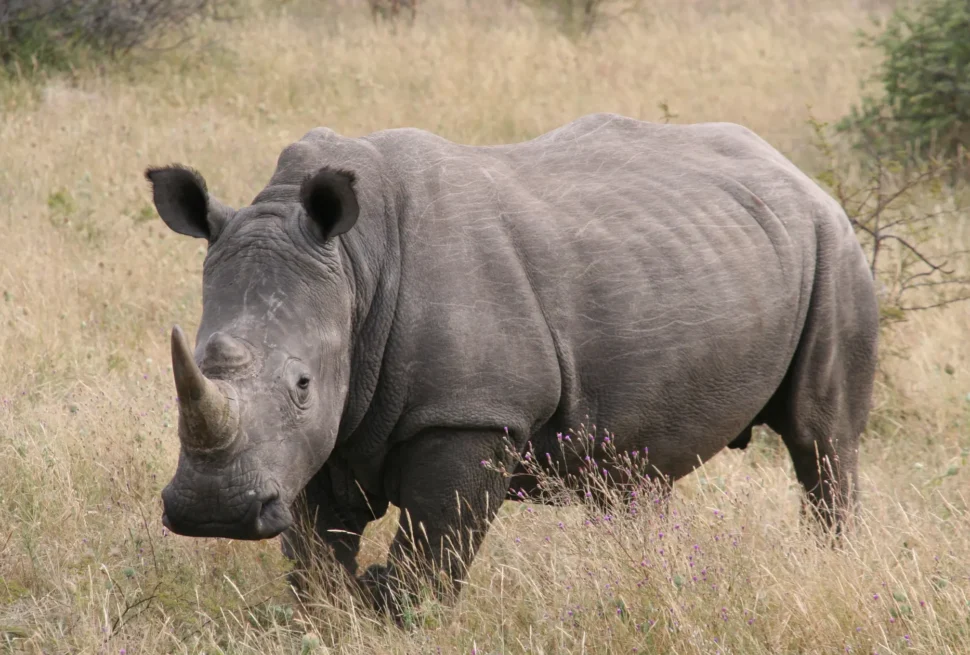
Yes. The Maasai Mara is one of Kenya’s best Big Five destinations. Lions and elephants are seen on virtually every multi-day safari. Leopards, cheetahs, and buffaloes are highly frequent. Black rhinos are occasionally spotted, particularly in the conservancy areas. On a 4-day safari with experienced guides, the probability of seeing all five is very high — though sightings always depend on wildlife movement and cannot be guaranteed.
Is Maasai Mara safe for tourists?
Yes. Maasai Mara is safe for tourists when travelling with professional guides and established operators. Game drives in the reserve are conducted in safari vehicles with trained guides who manage all interactions with wildlife. Follow your guide’s instructions at all times and remain in the vehicle unless at a designated safe area. Standard travel precautions (travel insurance, eTA, vaccinations) apply as for any international travel.
What is the best time for game drives in Maasai Mara?
Dawn is the best time — departing around 6:00–6:30am and returning by 10:00–11:00am. Predators are most active in the early morning, golden light makes photography exceptional, and wildlife is moving rather than resting. Afternoon drives from 3:30–4:00pm are also valuable, particularly for sunset light and as temperatures cool and animals become active again.
Should I choose a road safari or fly-in safari?
For a 3-day Maasai Mara trip, a fly-in safari is strongly recommended — the 5–6 hour road journey each way effectively reduces a 3-day trip to one and a half days of actual game driving. For 5+ day itineraries, a road safari is excellent value and the scenic journey through Kenya’s countryside is genuinely enjoyable. Many experienced safari planners recommend flying to the Mara and combining the return with a road drive through other parks.
Are Maasai Mara river crossings guaranteed?
No — and this is one of the most important things to understand before travelling during migration season. River crossings are natural, instinct-driven events. Wildebeest may gather at the river bank for days before committing to a crossing, or they may cross multiple times in a single morning. Travelling between August and September and staying at least 4–5 days in the Mara gives you the best possible chance of witnessing one — but it cannot be promised by any operator.
For official park rules and conservation information, visit the Kenya Wildlife Service.
Related Reading from Imela Tours & Travel: