A 7-day Kenya safari is enough time to do this country justice without rushing from park to park like you’re collecting stamps. In one week you can stand under Mount Kilimanjaro with elephants in the foreground at Amboseli, watch flamingos lift off a Rift Valley lake, track black and white rhinos at Lake Nakuru, and spend two full days chasing lions and cheetahs across the open grass of the Maasai Mara. That’s the route this guide walks you through: Nairobi to Amboseli to Lake Naivasha to Lake Nakuru to the Maasai Mara and back to Nairobi, a loop that hits four very different landscapes without burning half your trip on the road.
This isn’t the only good 7-day Kenya safari itinerary, and we’ll be honest about where it bends and where it doesn’t. But for a first-time visitor who wants variety, manageable drive times, and a real shot at the Big Five, it’s the route we recommend most often at Imela Tours & Travel.
Planning your first Kenya safari? We can customize this 7-day itinerary around your budget, travel dates, and preferred accommodation style. Request a free quote and tell us when you want to travel.
Quick Answer: A 7-day Kenya safari from Nairobi following the route Amboseli, Lake Naivasha, Lake Nakuru, and Maasai Mara is one of the best itineraries for first-time visitors. It combines elephant herds and Kilimanjaro views in Amboseli, a relaxed Rift Valley lake stop at Naivasha, a rhino sanctuary at Lake Nakuru, and two full days of Big Five game drives in the Maasai Mara. Total road travel across the loop runs roughly 18 to 22 hours, which is why many travelers fly one leg, usually Maasai Mara back to Nairobi, to cut down on driving.
Is 7 Days Enough for a Kenya Safari?
Yes. The real test of whether a Kenya itinerary works is whether it lets you see three or four destinations properly, and seven days does exactly that. Shorter trips force you to pick one park and stay there; longer trips are wonderful if you have the time and budget, but most first-time visitors don’t have two weeks to spare. Seven days sits in the sweet spot: long enough to settle into a rhythm, short enough to fit into a single block of vacation time, and just long enough to combine savannah, lakes, and a rhino sanctuary in one trip instead of choosing between them.
| Safari Length | Best For | Limitation |
| 3 days | A quick Maasai Mara or Amboseli escape | Too short to add real variety |
| 5 days | Two major parks at a comfortable pace | Good, but you’ll feel the squeeze |
| 7 days | A complete first-time Kenya safari | The best balance of variety and pace |
| 10+ days | Slow-paced luxury or a Kenya-Tanzania cross-border trip | Needs a bigger budget and more time off work |
If you’re deciding between a tighter trip and this fuller one, our Kenya safari cost guide breaks down what each length actually costs once park fees, accommodation, and transport are added up.
Best 7-Day Kenya Safari Route for First-Time Visitors
Nairobi → Amboseli National Park → Lake Naivasha → Lake Nakuru National Park → Maasai Mara → Nairobi
This loop works because it doesn’t try to do too much. Plenty of itineraries you’ll find online cram five or six parks into a week, which sounds impressive until you realize half the trip is spent in a vehicle watching the scenery blur past. This route hits four destinations, and each one earns its place: Amboseli for elephants and Kilimanjaro, Naivasha as a breather between safari days, Nakuru for rhinos and birdlife, and the Maasai Mara as the headline act.
We’ll say this upfront: it’s the best first-time route for most travelers, not the only correct one. If you’d rather skip Naivasha, add a second night somewhere else, or fly between legs instead of driving, Imela Tours can rebuild the itinerary around what matters most to you.
7-Day Kenya Safari Itinerary: Day-by-Day Plan
Day 1: Nairobi to Amboseli National Park
Most flights into Nairobi land in the morning, and that timing works in your favor here. After pickup, you’ll drive roughly 3.5 to 4 hours (around 220 km) southeast to Amboseli National Park, checking in at your lodge or camp in the early afternoon with time for an evening game drive before dark.
What to expect on Day 1:
- A long but scenic drive, with the Chyulu Hills and, on a clear day, your first glimpse of Kilimanjaro on the horizon
- Your first safari drive of the trip
- Likely sightings: elephants, giraffes, zebras, buffaloes, and maybe a distant pride of lions
- Best photo moment: Kilimanjaro lit by late afternoon sun, if the clouds cooperate
Day 2: Full-Day Safari in Amboseli
This is the day Amboseli earns its reputation. The park hosts one of Africa’s largest and most studied elephant populations, with researchers tracking individual elephants here since the early 1970s. You can genuinely encounter dozens of elephants in a single morning drive, something few other parks in Kenya can promise with this kind of consistency.
Spend the morning on a game drive timed for the cooler hours when animals are most active, stop at Observation Hill for a panoramic view of the park if your lodge includes it, then rest through the heat of midday before heading out again for an evening drive. We recommend two nights here rather than one. It roughly doubles your odds of catching Kilimanjaro without cloud cover, and elephant activity around the swamps tends to be richer once you’re not rushing through on a single afternoon.
One honest caveat: don’t book this trip assuming you’ll get the postcard shot. Kilimanjaro is clearest on cool, dry mornings, and we’ve had guests get three perfect days in a row and others who saw nothing but cloud for the entire stay. It’s a defining feature of Amboseli, not a guarantee.
Day 3: Amboseli to Lake Naivasha
Early breakfast, then the longest drive of the trip: roughly 5 to 6 hours covering around 300 to 320 km, mostly looping back through or around Nairobi before continuing north into the Rift Valley. It’s a haul, and we won’t pretend otherwise. But it’s also the day that turns this itinerary from “two safari parks” into a real Kenya trip, because Lake Naivasha is nothing like Amboseli.
Why include Lake Naivasha in a 7-day Kenya safari? It breaks up the long road journey between Amboseli, Nakuru, and the Maasai Mara while adding something completely different: a boat ride past hippos and fish eagles, optional birdwatching, and a walking safari on Crescent Island, a private peninsula where giraffes, zebras, and waterbuck roam with no resident predators, so you can explore on foot rather than from inside a vehicle.
Think of this as the itinerary’s scenic breather. After two intense safari days, a slower lakeside afternoon resets you before Nakuru and the Mara.
Day 4: Lake Naivasha to Lake Nakuru National Park
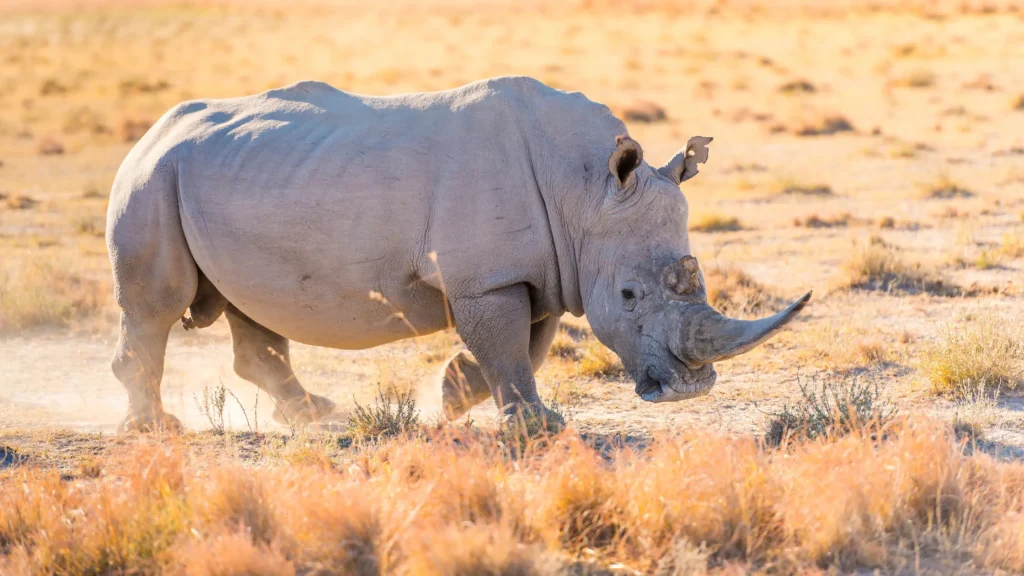
The drive to Lake Nakuru is short, just 1.5 to 2 hours, so this counts as one of the easiest travel days on the itinerary. You’ll have most of the day for a proper game drive once you arrive.
Lake Nakuru is the best rhino-focused stop on this route. Kenya Wildlife Service designated it the country’s first rhino sanctuary in 1987, and it now protects both critically endangered black rhinos and the larger, more easily spotted white rhinos inside a single fenced reserve, something almost no other park in Kenya can offer with this level of reliability. Beyond rhinos, look for Rothschild’s giraffes, reintroduced here as part of their own conservation program, plus buffaloes, lions, leopards, and a long list of resident and migratory birds.
A word on flamingos, since the old postcards oversell it: don’t go in expecting the lake to be pink wall to wall. Flamingo numbers at Nakuru shift with water levels and food availability from year to year, and some seasons bring far fewer birds than those famous photographs suggest. The rhinos are the reliable headline here. The flamingos are a bonus if conditions line up.
Day 5: Lake Nakuru to Maasai Mara
Early breakfast, then a drive of roughly 4 to 5 hours to the Maasai Mara, with arrival timed for lunch or an early afternoon check-in depending on road conditions. Most travelers head straight into an evening game drive the moment they’ve dropped their bags, and we’d encourage you to do the same. The light in the last two hours before sunset is some of the best you’ll get all week.
For a lot of first-time visitors, the Mara is the moment the trip clicks. The combination of open savannah, dense predator populations, and that classic wide-horizon safari look is hard to match anywhere else in Kenya.
Day 6: Full-Day Safari in Maasai Mara
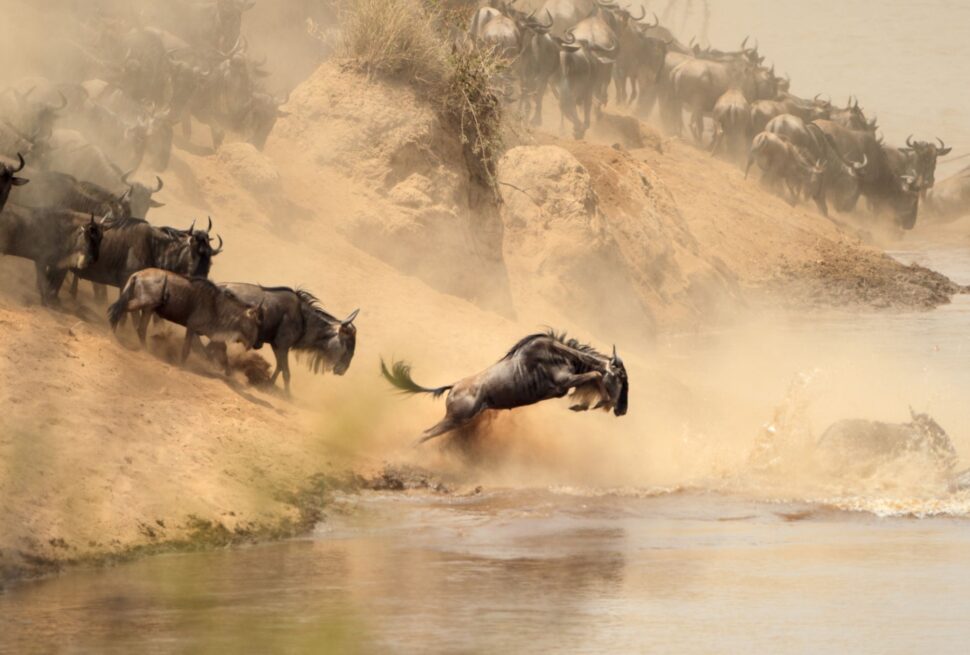
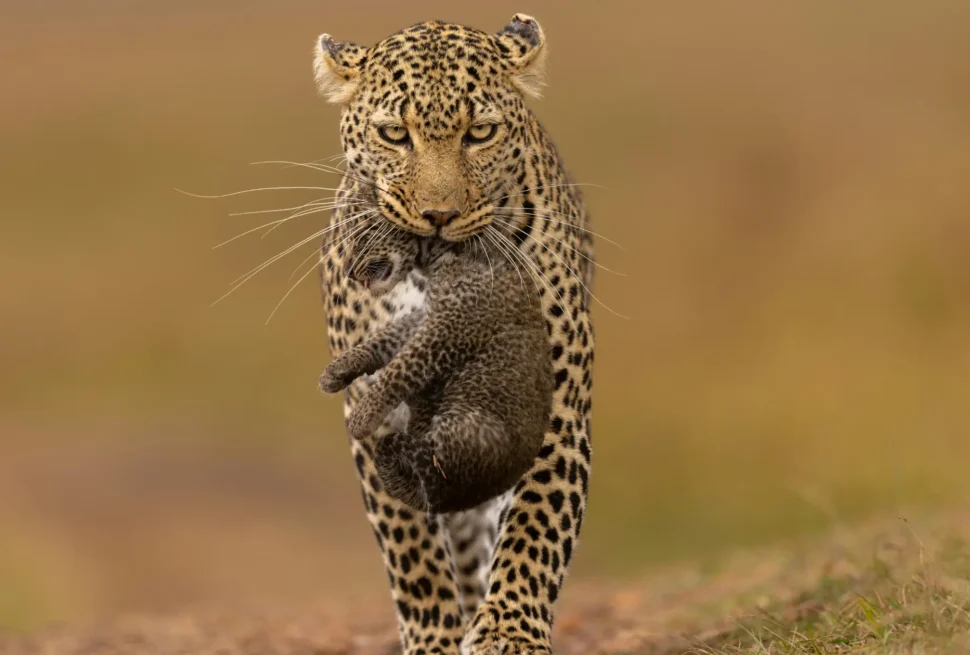
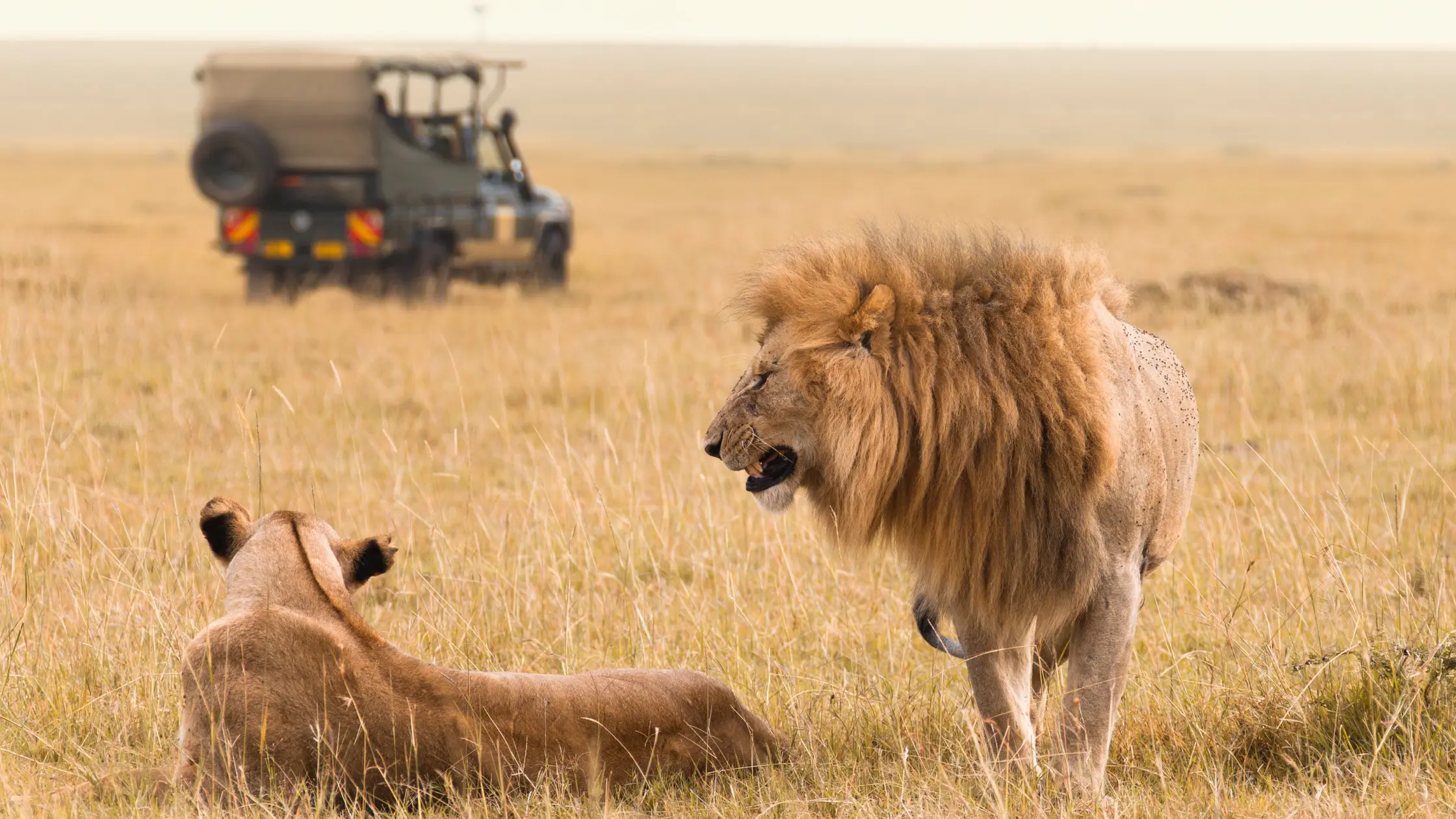
This is usually the best wildlife day of the entire week. The Maasai Mara’s open plains hold game year-round, so sightings stay strong no matter the season, and a full day in the field gives your guide room to chase whatever’s moving: lions on a hunt, a cheetah with cubs, a stand-off at a river crossing if you’re visiting during migration months.
Head out early with a packed breakfast and lunch, and let the day run long. Realistic targets include lions, elephants, buffaloes, giraffes, zebras, hyenas, and with some luck, a leopard draped over an acacia branch. Magical Kenya lists hot air balloon safaris at dawn, guided nature walks with a Maasai guide, and traditional village visits among the top experiences here, and any of the three is worth adding if your schedule allows it.
If you have to choose between sleeping in and the dawn game drive, there’s never really a question: set the alarm. Predators are most active in the first hour of light, and that’s also when the Mara is at its quietest and coolest.
Day 7: Maasai Mara to Nairobi
A final breakfast at camp, an optional short morning drive if your departure time allows, then the return journey to Nairobi by road (roughly 5 to 6 hours) or by a short scheduled flight from one of the Mara’s airstrips, which takes about 45 minutes and saves most of a day if you have a flight to catch.
After seven days, this is what you walk away with: elephant herds against Kilimanjaro in Amboseli, a slower Rift Valley afternoon at Naivasha, rhinos at Lake Nakuru, and two full days in the Maasai Mara’s big-cat country. It’s a strong, honest introduction to Kenya, and most first-timers leave already planning their next trip.
7-Day Kenya Safari Itinerary Summary Table
| Day | Route | Main Highlight | Overnight |
| 1 | Nairobi to Amboseli | First game drive, Kilimanjaro views | Amboseli |
| 2 | Amboseli | Elephant herds, full-day safari | Amboseli |
| 3 | Amboseli to Naivasha | Rift Valley scenery, boat ride | Naivasha |
| 4 | Naivasha to Nakuru | Rhino sanctuary, birdlife | Nakuru |
| 5 | Nakuru to Maasai Mara | Evening game drive | Maasai Mara |
| 6 | Maasai Mara | Full-day Big Five safari | Maasai Mara |
| 7 | Maasai Mara to Nairobi | Return transfer | Nairobi / departure |
Want this exact safari customized for you? Tell us your travel month, group size, and preferred comfort level, and we’ll recommend the best lodges and route adjustments. Get your safari quote here.
Best Time to Do a 7-Day Kenya Safari
Kenya’s dry season, June through October, gives you the clearest skies, the easiest wildlife viewing, and the highest odds of catching the Great Migration if your dates fall between roughly late July and October. A short dry window in January and February offers strong game viewing, calving season action, and noticeably lower prices, and it’s a stretch we recommend often to travelers who don’t want peak-season crowds or peak-season rates.

The green season, March to May plus November, brings rain, but also fewer vehicles at every sighting, dramatic skies for photography, and the lowest prices of the year. Wildlife doesn’t disappear in the green season. It just gets a little harder to spot in taller grass.
What we won’t do is promise you exact migration dates. River crossings depend on rainfall and herd movement, and they shift from year to year. Tell us your travel month and we’ll advise honestly on whether to prioritize the Maasai Mara, Amboseli, Lake Nakuru, or a different combination entirely for that specific window. Our guide to the best time to visit Maasai Mara goes deeper into month-by-month conditions if you want to fine-tune your dates.
How Much Does a 7-Day Kenya Safari Cost?
We’re not going to throw out a single number here, because a 7-day Kenya safari can be built at very different price points depending on a handful of variables: accommodation level, private versus group travel, the season you’re traveling in, park and conservancy fees, vehicle type, group size, whether you fly any legs instead of driving, and optional extras like a balloon safari or village visit.
As a rough guide, budget travelers building a trip like this with simple camps and group vehicles tend to land somewhere in the $150 to $300 per person per day range. Mid-range travelers in comfortable tented camps and lodges usually fall between $300 and $700 per day. Luxury and exclusive-use camps push well past $700, sometimes into the thousands, depending on the property. For the full math behind these figures, including park fees and what actually separates a $200-a-day safari from a $2,000-a-day one, see our complete Kenya safari cost breakdown. If budget is your main constraint, our budget safari guide walks through how to build a version of this same route without losing the experiences that matter most. Tell us your number and we’ll build the route around it, rather than the other way around.
Where Should You Stay on a 7-Day Kenya Safari?
Accommodation on this route generally falls into four tiers. At the bottom, budget camps with simple tents and shared facilities, a sensible choice if you’d rather spend on extra safari days than on the room itself. Most first-time travelers on a 7-day trip end up in the middle tier: comfortable tented camps and lodges with hot showers and decent food, without the luxury markup. Above that sit proper luxury camps and lodges, the kind that suit honeymooners and anyone who wants the trip to feel like a holiday rather than an expedition. And at the top, private conservancy camps, where you pay for exclusivity and get it: fewer vehicles, sometimes none, at every single sighting.
Don’t choose purely on price. Location matters more than star rating, especially in the Maasai Mara, where a camp twenty minutes further from the action can mean an extra hour of driving on every single game drive. A well-located mid-range camp will usually serve you better than an over-priced luxury one in the wrong spot.
Road Safari vs Flying Safari: Which Is Better for 7 Days?
| Option | Best For | Pros | Cons |
| Road safari | Most first-time travelers | More affordable, scenic, flexible | Longer transfers between parks |
| Flying safari | Luxury travelers, tight timelines | Saves time, far more comfortable | Significantly higher cost |
| Mixed safari | Balanced comfort and budget | Fly the longest leg, drive the rest | Needs more careful planning |
For most first-time travelers, a road safari works well on this route. The drives between Amboseli, Naivasha, and Nakuru pass through genuinely scenic Rift Valley country, and seeing Kenya from the ground rather than from 10,000 feet is part of the experience. The one place worth considering a flight is the final leg, Maasai Mara back to Nairobi, especially if you have an international flight to catch the same evening. A 45-minute hop beats a 5 to 6-hour drive when the stakes are an airport deadline.
What Animals Can You See on This 7-Day Kenya Safari?
Each stop on this route brings a different mix of wildlife, and that variety is a big part of why the itinerary works as well as it does.
Amboseli: large elephant herds, often dozens in a single sighting, plus lions, buffaloes, giraffes, zebras, wildebeest, hyenas, and over 400 recorded bird species.
Lake Nakuru: black and white rhinos, Rothschild’s giraffes, buffaloes, lions, leopards, and a strong variety of waterbirds.
Maasai Mara: lions, cheetahs, elephants, buffaloes, leopards, giraffes, zebras, wildebeest, and hyenas, with the occasional rhino on Mara conservancy land.
Lake Naivasha: hippos, fish eagles and other waterbirds, plus giraffes, zebras, and waterbuck on the Crescent Island walking safari.
Sightings are never guaranteed anywhere in the wild, no matter what a brochure promises. What an experienced guide gives you is better odds, not certainty. That’s worth remembering before you set your heart on any single animal.
Travel Requirements for a Kenya Safari
Before you book flights, confirm your passport has at least six months of validity remaining and at least one blank page. Most visitors also need a Kenya eTA (Electronic Travel Authorization), which replaced the old visa system in January 2024. Standard processing typically starts at $30 and takes up to 72 hours, with an expedited option available for an extra fee if you’re applying close to your travel date. Apply as soon as your flights and accommodation are confirmed, and double-check the current fee and processing window on the official portal before you pay, since the figures third-party sites quote don’t always match what the government site charges.
A yellow fever certificate isn’t required for travelers flying directly into Kenya from the US, UK, Canada, or most of Europe, but it is required if you’re transiting through a yellow fever endemic country for more than about 12 hours en route. Check your specific routing rather than assuming either way.
Beyond documents, pack proper travel insurance that covers medical evacuation. It typically runs $100 to $300 for a trip this length, a small price next to the $3,000 to $8,000 an emergency evacuation can cost without it. Most lodges and camps accept cards, but carry some Kenyan shillings or US dollars in cash for tips, small purchases, and rural stops where card machines aren’t reliable.
What to Pack for a 7-Day Kenya Safari
Keep your packing list practical rather than exhaustive. You’ll want neutral-colored safari clothing (camouflage patterns are actually illegal to wear in Kenya, so skip those entirely), a light jacket or fleece for cool mornings and evenings, comfortable closed shoes, a hat, sunglasses, and sunscreen. Add insect repellent, a camera with spare batteries or a power bank, binoculars if you have them, a reusable water bottle, a small day bag for game drives, any personal medication in its original packaging, and your passport, eTA approval, and travel insurance documents kept together in one place.
If you’re flying any leg of this trip on a bush plane, most carriers cap soft-sided luggage at around 15 kg per person, so pack light for those segments specifically.
Is This 7-Day Kenya Safari Good for Families?
Yes, with a bit of planning. Choose lodges that explicitly welcome children and ideally have a pool, since not every camp does. Book a private vehicle rather than joining a shared group safari, which gives you control over the pace and lets you cut a game drive short if young kids are restless. Build in rest breaks rather than scheduling back-to-back activities every day, and check age restrictions before booking a balloon safari or any walking activity, since most operators set a minimum age around 7 or 8. Our family safari packages, including the 6-day family safari, follow exactly this kind of pacing if you’d rather start from a template built for kids.
Can This Itinerary Be Customized?
Yes, and this is honestly where the route gets interesting. The plan above is a strong default, not a fixed package, and Imela Tours can adjust nearly every part of it.

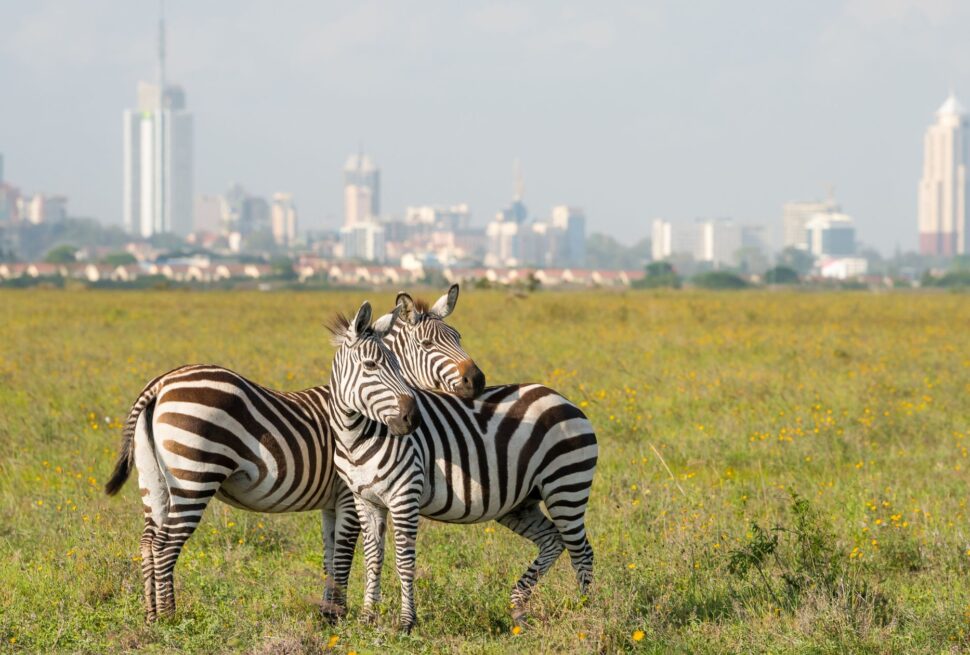
Common changes we make for guests: adding a Nairobi National Park game drive on arrival day, since it’s a short drive from the city center and KWS records over 400 bird species there alongside black rhinos, lions, leopards, and cheetahs, all without adding a flight or an extra overnight. Swapping in Ol Pejeta Conservancy for rhino tracking and its chimpanzee sanctuary. Trading the Naivasha night for an extra night in Amboseli if Kilimanjaro views matter more to you than lake scenery. Adding a beach extension in Diani after the safari ends. Switching to a Maasai Mara fly-in safari to cut driving time dramatically. Upgrading the whole route to luxury lodges throughout. Or building a dedicated honeymoon, photography, or budget version of the same core route.
If you’re considering combining Kenya with the Serengeti or Ngorongoro, our cross-border safari packages and the 13-day Kenya-Tanzania safari extend this kind of itinerary across both countries.
Recommended 7-Day Kenya Safari Variations
Budget 7-Day Kenya Safari
Route: Nairobi → Maasai Mara → Lake Nakuru → Amboseli → Nairobi Best for: cost-conscious travelers who still want three major parks Accommodation: budget camps and simple lodges
Classic Mid-Range 7-Day Kenya Safari
Route: Nairobi → Amboseli → Naivasha → Nakuru → Maasai Mara → Nairobi Best for: most first-time visitors Accommodation: comfortable tented camps and lodges, similar to our 7-day classic Kenya safari
Luxury 7-Day Kenya Safari
Route: Nairobi → Amboseli → Maasai Mara private conservancy → Nairobi by flight Best for: honeymooners, premium travelers, photographers Accommodation: luxury camps and lodges, often paired with a fly-in safari to minimize road time
Final Thoughts: Your 7-Day Kenya Safari, Planned Right
A 7-day Kenya safari is one of the best ways to see this country for the first time, provided the route is built with intention rather than crammed full of parks for the sake of a longer brochure. The version in this guide works because nothing on it is filler. Every stop earns its place, the drives are honest about how long they take, and the trip ends with you having actually rested between safari days instead of arriving home needing a holiday from your holiday.
Quick recap of what makes this route work:
- Four destinations, each earning its place rather than padding the itinerary
- Manageable drive times, with one optional flight leg if you’d rather save the day
- A realistic shot at the Big Five across the full week
- Built-in flexibility for budget, mid-range, or luxury travelers alike
Send us your travel dates, group size, and budget, and we’ll turn this itinerary into a private quote built around you. Request your free quote, browse our full range of Kenya safari packages, or get in touch directly if you’d rather talk it through first. Your Kenya safari starts here.
Frequently Asked Questions
Is 7 days enough for a Kenya safari?
Yes. Seven days is enough for a well-balanced Kenya safari covering Amboseli, the Rift Valley lakes, Lake Nakuru, and the Maasai Mara, without feeling rushed at any single stop.
What is the best 7-day Kenya safari itinerary?
A strong first-time route runs Nairobi, Amboseli, Lake Naivasha, Lake Nakuru, and the Maasai Mara, ending back in Nairobi. See our Kenya safari packages from Nairobi for other route options.
Can I see the Big Five in 7 days in Kenya?
Yes, it’s possible, especially combining the Maasai Mara, Lake Nakuru, and Amboseli on this route. Rhino sightings are most reliable at Nakuru’s sanctuary. That said, wildlife sightings are never guaranteed anywhere in the wild.
Should I visit Amboseli or Maasai Mara first?
Either order can work, but starting with Amboseli and ending with the Maasai Mara builds momentum nicely, since the Mara is usually the wildlife highlight of the trip for first-time visitors.
Is a 7-day Kenya safari better by road or by flight?
Road safaris are more affordable and let you see the country between parks. Flying saves time and adds comfort, particularly on the longer legs. A mixed approach, driving most of the route and flying the final leg back to Nairobi, often works best.
What is the best month for a 7-day Kenya safari?
June through October and January through February are the most popular safari months. Our best time to visit Maasai Mara guide breaks down what each month actually offers in terms of weather, crowds, and migration odds.
Can I add Diani Beach after a 7-day safari?
Yes. Many travelers add three to four nights in Diani, Watamu, or Mombasa after this itinerary to unwind on the coast before flying home.
How do I book this itinerary?
Request a custom quote from Imela Tours with your travel dates, number of travelers, budget, and preferred accommodation style, and we’ll come back to you with a personalized version of this route.
Park and conservation details in this guide are drawn from Kenya Wildlife Service and Magical Kenya, the official tourism board of Kenya. Always confirm current entry requirements directly with the Kenya eTA portal before booking flights.
Related Reading from Imela Tours & Travel: