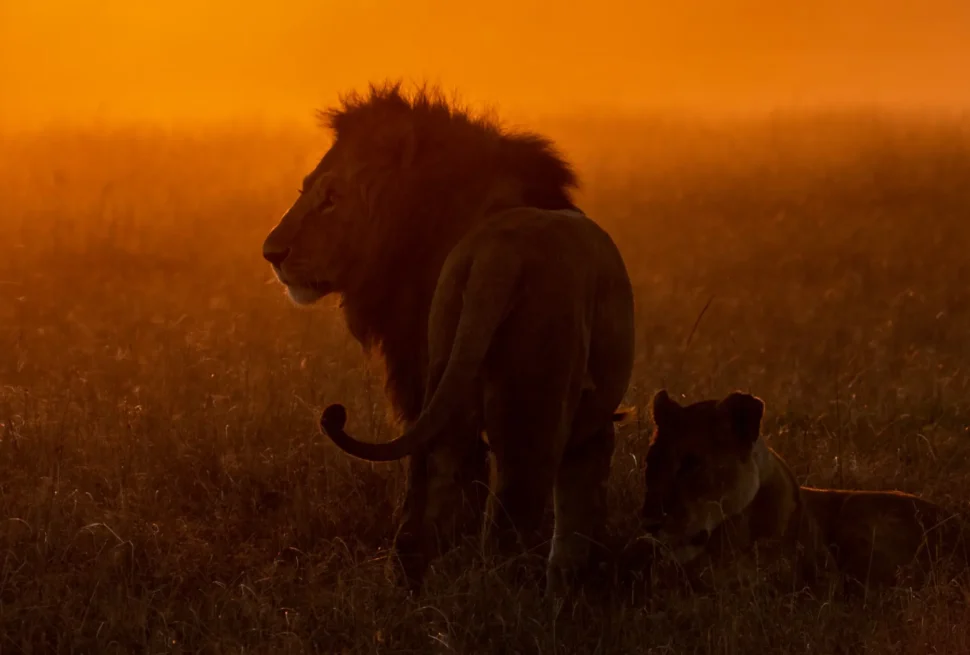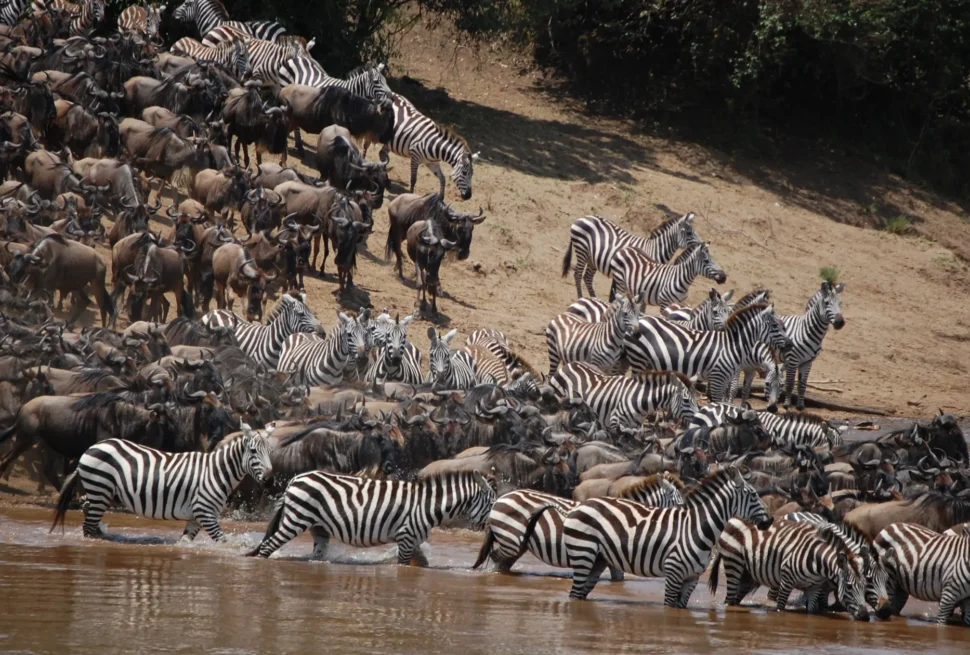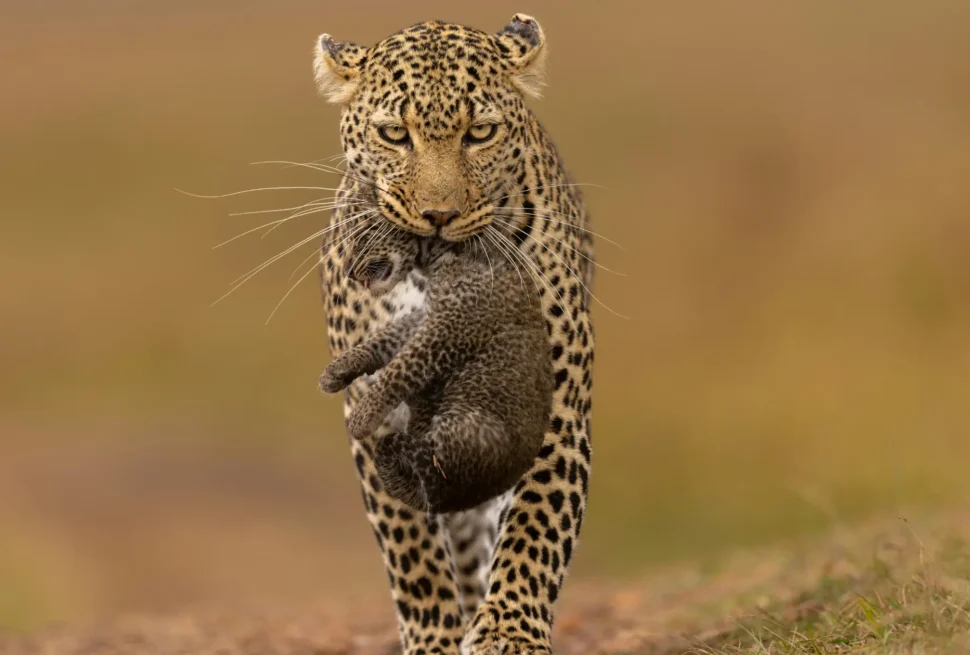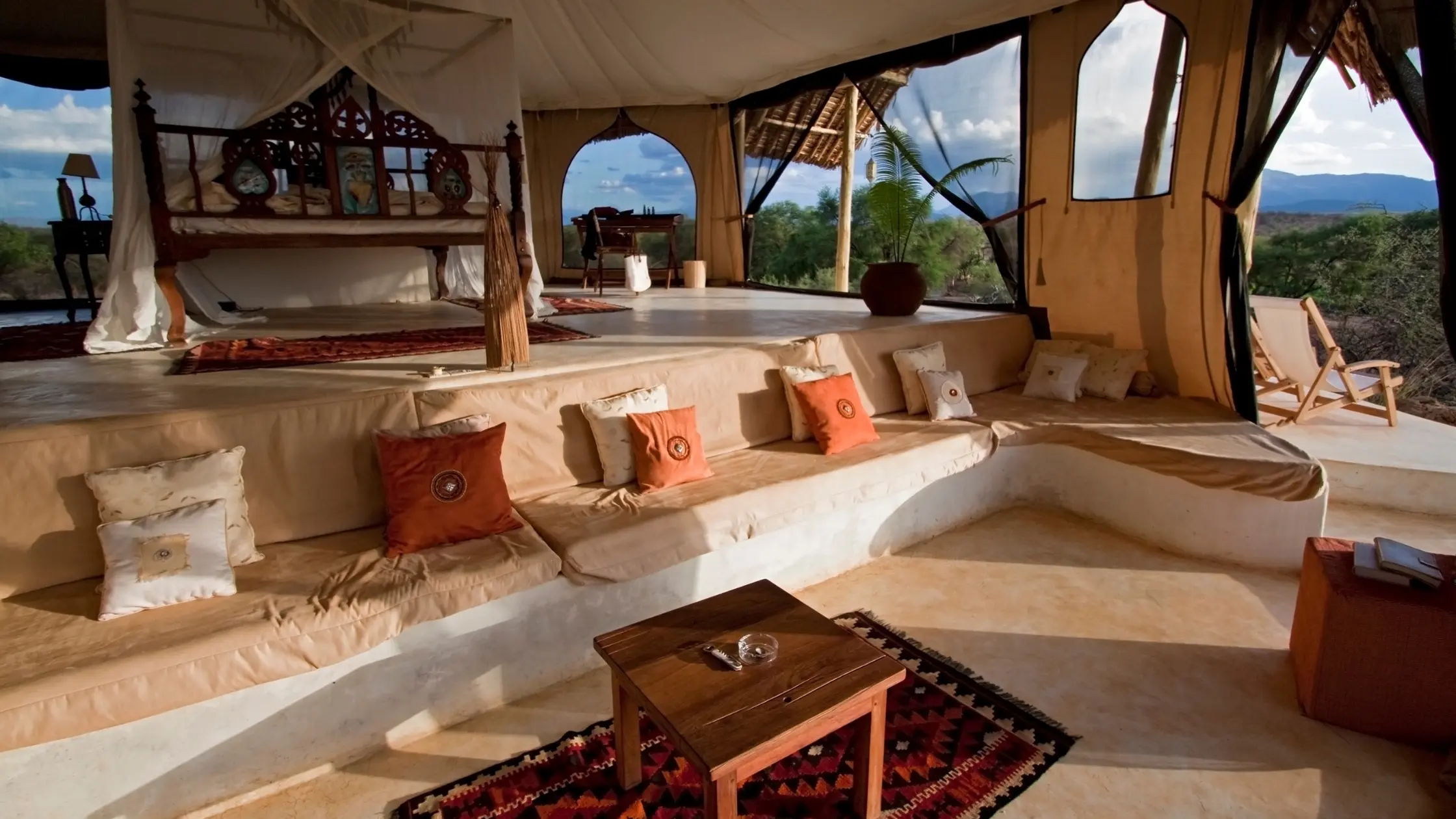
Picture this: you wake before dawn in a canvas suite open to the plains. There’s no alarm; it’s a lion coughing somewhere to the east. Your guide is already at the vehicle with coffee. By the time the sun breaks over the Mara, you’ve been watching a cheetah for twenty minutes.
That’s what a luxury safari in Kenya actually is. Not just an expensive lodge with a pool. It’s the privacy of your own vehicle, a guide who knows these animals by name, a champagne breakfast after a balloon flight, a dinner table set under a tree on the savannah. The logistics handled. The itinerary built around you.
Kenya is genuinely one of the best places in Africa for this kind of travel. It has the wildlife density to back up the premium price tag (the Maasai Mara, Amboseli, Laikipia, Samburu, the Chyulu Hills) and private conservancies that give you experiences national parks simply don’t allow: night drives, walking safaris, horseback rides through herds of Grevy’s zebra. Add a beach extension to Diani or Lamu, and you have a trip that covers most of what East Africa does best.
Planning a luxury safari in Kenya? Tell us your travel dates, preferred destinations, and the kind of experience you’re after; and we’ll design an itinerary around you.
What Is a Luxury Safari in Kenya?
Quick Answer: A luxury safari in Kenya is a tailor-made wildlife trip built around your travel style rather than a fixed group schedule. It combines premium lodges or tented camps, an expert private guide, flexible game drives, and a suite of experiences (balloon flights, bush dinners, walking safaris, sundowners, spa time, and night drives) that aren’t available on a standard group trip. Fly-in transfers mean you spend your time in the wildlife, not on the road.
What Makes a Kenya Safari “Luxury”?
The word gets used loosely, so it’s worth being specific. Here’s what actually separates a luxury Kenya safari from everything else.
- A private vehicle and guide: This is the single most important upgrade. On a shared safari, you go where the group decides and stop when the group agrees. On a private safari, your guide tracks a specific leopard for two hours if that’s what you want. You stay at a sighting until you’re satisfied. You leave when the light is perfect, not when the schedule says so.
- Location: The best luxury camps are positioned where the wildlife is, not 20 minutes outside the gate. A private conservancy bordering the Maasai Mara might have 12 vehicles in 45,000 acres. The main reserve on a busy August morning might have 150. Same wildlife. Very different experience.
- What’s included: Budget and mid-range packages include game drives, meals, and accommodation. Luxury packages often go further: all drinks, including premium spirits, laundry, internal airstrip transfers, cultural visits, guided walks, night drives, even yoga and spa treatments. You stop counting what things cost.
- The guiding: A great guide is the difference between watching a lion and understanding it. At the luxury end, guides are typically more experienced, better trained in wildlife ecology, and more selective about the camps they work with.
- Personalised itinerary: You’re not following a route designed for the average traveller. Your itinerary reflects your specific interests, like migration photography, rhino conservation, honeymoons, family with young children, and birding. The camps, the activities, and the pace are chosen accordingly.
- Fly-in transfers. Long road drives are tiring. Fly-in safaris replace a five-hour drive from Nairobi to the Mara with a 45-minute flight over the Rift Valley. You land, you’re in a vehicle, you’re watching wildlife before lunch.
In summary, the best luxury safari in Kenya should include: a well-matched lodge or camp; a strong wildlife destination; expert private guiding; comfortable fly-in or private road transfers; a flexible itinerary; premium dining; and meaningful experiences that go beyond standard game drives.
Best Places for a Luxury Safari in Kenya
| Destination | Best For |
| Maasai Mara | Big cats, Great Migration, luxury camps with private conservancy access |
| Amboseli | Elephant herds, Kilimanjaro views, photography, honeymooners |
| Laikipia / Lewa | Conservation, rare species, exclusivity, horseback and walking safaris |
| Samburu | Unique northern wildlife, remote luxury, dramatic landscape |
| Tsavo / Chyulu Hills | Wide wilderness, privacy, Kilimanjaro views, star bed experiences |
| Nairobi | Pre/post-safari luxury stays, short wildlife add-ons |
Maasai Mara and the Private Conservancies
The Maasai Mara is where most people start, and it earns the reputation. The combination of open plains, year-round predator populations, and the July–October Great Migration puts it among the best wildlife destinations anywhere. But the Mara experience varies enormously depending on where you stay.
The national reserve is extraordinary. It’s also, in peak season, genuinely crowded at key sightings. The solution is the network of private conservancies surrounding the reserve (Mara North, Olare Motorogi, Ol Kinyei, Naboisho) where vehicle numbers are tightly controlled and lodges operate on exclusive or near-exclusive terms. In a private conservancy, you can do night drives. You can walk. You can position your vehicle off-road for a cleaner photograph. You’re also typically paying more, but the wildlife experience is measurably different.
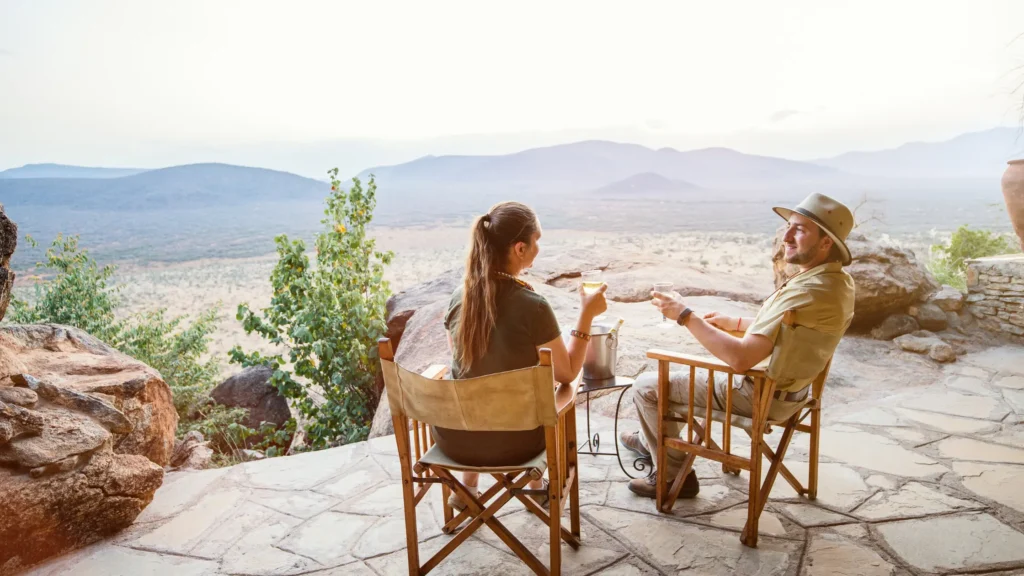
Angama Mara sits on the Great Rift Valley escarpment with floor-to-ceiling glass suites and some of the most dramatic views of the Mara below. Game drives, balloon safaris, wellness, cultural activities with the Maasai community — it’s built for guests who want everything, and most of them come back.
Best time: July–October for the Great Migration. January–February for excellent predator activity without the peak crowds. Our Maasai Mara safaris cover the full range of camps and conservancy options.
Amboseli and the Kilimanjaro View
Amboseli National Park has one feature no other park in Africa can match: views of Mount Kilimanjaro rising behind elephant herds crossing the open floodplains. On a clear morning — most common early in the day during the dry months — it’s the kind of scene that makes experienced travellers go quiet.
The elephants here are among the most studied in the world and habituated to vehicles. Bulls with ground-sweeping tusks walk past at a few metres. The park also holds lions, leopards, cheetahs, hippos, and over 600 bird species in its wetlands.
Luxury accommodation in Amboseli tends toward intimate camps with private butler service, outdoor showers overlooking the plains, and private vehicles. It’s a popular honeymoon destination for exactly these reasons.
Best combined with: Maasai Mara (fly between them), Chyulu Hills (short road transfer), or a Diani Beach extension for a bush-and-ocean week.
Laikipia and Lewa Conservancy
Laikipia is the destination gaining serious attention among experienced Africa travellers, and for good reason. It’s not one park but a mosaic of private and community conservancies across a plateau northwest of Mount Kenya — a region where some of the most innovative conservation work in Africa happens.
The wildlife is different from the Mara. Laikipia holds the second-largest elephant population in Kenya, significant populations of both black and white rhino, African wild dogs (rare elsewhere in the country), reticulated giraffes, Beisa oryx, and Grevy’s zebra. The black (melanistic) leopard, one of the rarest animals in Africa, has been confirmed in the Laikipia–Samburu corridor.
andBeyond Suyian Lodge opened in 2025 and was named one of TIME magazine’s World’s Greatest Places for 2026. It’s the sole camp on the 44,000-acre Suyian Conservancy, a former cattle ranch converted into a wildlife corridor connecting Laikipia to northern Kenya. From $1,500 per person per night, rates include accommodation, all meals, twice-daily game drives, horseback and camel safaris, nature walks, Samburu cultural visits, yoga, and laundry. Experiences include tracking wild dogs on horseback, spotting Grevy’s zebra from a camel, and searching for the black leopard at night. The conservancy is solar-powered and operates under a non-profit model supporting anti-poaching and community livelihoods.
Borana Lodge, on the adjacent 32,000-acre Borana Conservancy bordering Lewa, offers horseback riding through rhino territory — the “Riding Wild” experience — alongside night drives, guided walks, and Big Five game drives.
Best for: Travellers who’ve done the Mara before and want something more remote. Conservation-focused guests. Horseback riders. Anyone who specifically wants night drives and walking safaris in uncrowded wilderness.
See our Luxury Safari trip type for Laikipia options.
Samburu and Northern Kenya
Samburu National Reserve sits in Kenya’s arid north, about 350 km from Nairobi, where the landscape changes from highland green to red-ochre rock and the Ewaso Ng’iro River winds through dry acacia scrub. The wildlife here includes the “Samburu Special Five” — reticulated giraffe, Grevy’s zebra, Beisa oryx, gerenuk, and Somali ostrich — species found nowhere else in Kenya.
Luxury camps in Samburu tend toward the intimate: 6–12 tents, private vehicles, exceptional guiding, and a sense of remoteness that genuinely separates this from the Mara’s more trafficked game drives. The Ewaso Ng’iro River provides a reliable wildlife corridor — elephant herds, leopards, and lions all congregate along the banks.
Getting there requires either a flight from Wilson Airport (about an hour) or a full day’s drive — a fly-in is strongly recommended for luxury itineraries.
Best combined with: Laikipia (they share the northern Kenya ecosystem), Maasai Mara (combine north and south), or a Lewa conservancy stay for a comprehensive northern Kenya circuit.
Tsavo, Chyulu Hills, and Private Wilderness
The Chyulu Hills are one of Kenya’s least-visited and most spectacular landscapes — young volcanic hills rising sharply from the plains between Tsavo and Amboseli, covered in dense forest, with views of Kilimanjaro to the south. Ernest Hemingway called them “the green hills of Africa.”
Ol Donyo Lodge (Great Plains Conservation) is the only camp on the 275,000-acre Mbirikani Maasai Group Ranch — a private wilderness almost twice the size of the Maasai Mara. Suites have private plunge pools and rooftop star beds where you sleep outside under the sky. Rates include horseback safaris, helicopter flights over Amboseli and Kilimanjaro, an underground wildlife hide at the waterhole, night drives, walking safaris, and a star bed experience. It’s a Relais & Châteaux property.
Tsavo East and Tsavo West — Kenya’s largest national parks combined — offer luxury lodges with a very different atmosphere from the Mara: fewer vehicles, wider spaces, and a sense of genuinely remote Africa that’s harder to find in more popular parks.
Best for: Guests who want privacy and exclusivity over wildlife density. Photographers wanting clean, uncluttered landscapes. Couples or small groups who specifically want a star bed or helicopter experience.
Nairobi: Pre- and Post-Safari
Most luxury Kenya itineraries start and end in Nairobi. The city has its own wildlife experiences worth factoring in: Nairobi National Park (lions, rhinos, and buffaloes against the city skyline) is 20 minutes from the CBD; the Giraffe Centre and David Sheldrick Elephant Orphanage are both meaningful half-morning stops. The Karen Blixen Museum, in the suburb where Out of Africa was set, is worth an hour.
Pre-safari, a night at a good Nairobi hotel — Hemingways Karen, the Fairmont Norfolk, Giraffe Manor — sets the tone. Giraffe Manor in particular books months in advance; resident Rothschild giraffes visit the breakfast table.
Best Luxury Safari Experiences in Kenya
Private Game Drives
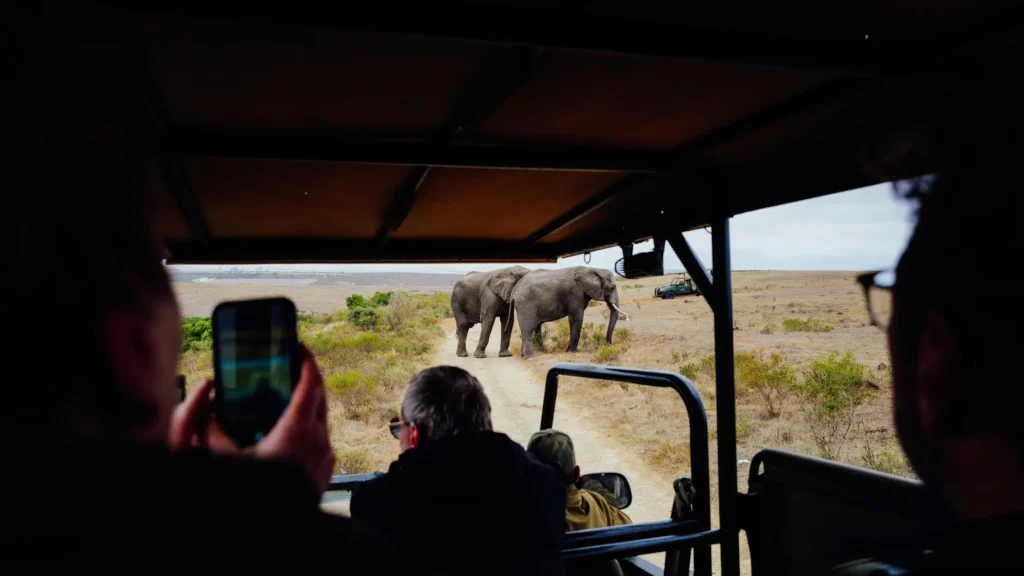
This is where the real value of a luxury safari lives. A private vehicle means you go where you want, stop when you want, and stay as long as you want. When your guide finds a leopard with cubs at 6am, you don’t have to leave because someone else needs breakfast. You stay.
Private vehicles also mean better photographs — your guide can reposition the vehicle for the right angle, cut the engine at the critical moment, and sit in silence for as long as the sighting holds.
At conservancy camps, private drives can go off-road, at night, and beyond the boundaries where national park rules apply. The difference between a conservancy game drive and a reserve game drive is material.
Fly-In Safaris
The Nairobi–Maasai Mara road journey takes 5–6 hours. The flight takes 45 minutes, and you arrive looking at the plains, not recovering from a drive. For luxury itineraries covering multiple destinations — Mara, Laikipia, Samburu, Amboseli — flying between parks is almost always the right call. The aerial views of the Rift Valley, the Mara plains, and the Laikipia plateau are worth having in their own right.
Our 5-Day Classic Wings Safari and Flying Safari trip type pages cover the main fly-in itinerary options.
Hot-Air Balloon Safari
A dawn balloon flight over the Maasai Mara is genuinely one of the best travel experiences in Africa. The scale of it — the Mara spread out below, herds visible in every direction, the silence interrupted only by the occasional burner blast — doesn’t really translate to photographs.
Pickup is around 5:00–5:30am (sometimes the pre-dawn drive out is itself eventful — lions, hyenas, leopards on the move). You lift off at sunrise, float for about an hour covering 12–25 km depending on wind, and land for a champagne bush breakfast. Back at camp by 10:30am, which leaves the whole afternoon game drive ahead.
Current cost: $450–$580 per person for a shared balloon (up to 16 passengers). Minimum age is typically 7–8 years. Book in advance — peak season slots fill quickly. See our Maasai Mara Safari Tips for what to bring and what to expect on the morning.
Sundowners and Bush Dining
The ritual of stopping on an evening drive, somewhere with a view, and watching the sun go down with a drink in hand — it sounds simple, and it is, and it’s one of the things most travellers remember longest.
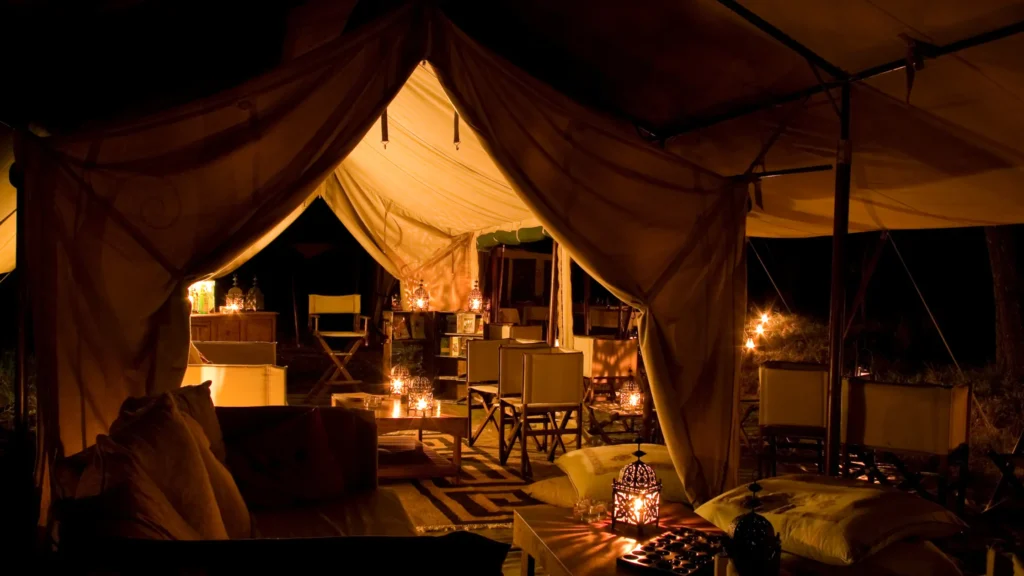
Beyond the standard sundowner: bush breakfasts after a morning drive, private dinners set up in the bush by a camp’s staff (candles, tablecloths, a chef, no other guests), and lantern-lit dining under a tree. These aren’t upsells at the luxury camps — they’re standard practice.
Walking Safaris and Night Drives
Both are restricted in Kenya’s national parks. In private conservancies, both are standard. This matters.
A walking safari with an experienced guide and an armed ranger changes your relationship with the landscape completely. You’re tracking, listening, crouching beside spoor. The scale of everything shifts when you’re on foot. An elephant at 40 metres looks different than an elephant at 40 metres from a vehicle.
Night drives reveal a different set of animals entirely: genets, civets, bush babies, porcupines, nightjars. More relevantly, lions and leopards hunting. Sightings that are simply not possible between 6am and 6pm when national park gates are open.
If night drives and walking safaris are on your list, conservancy accommodation is not optional — it’s the point.
Wellness, Spa, and Slow Days
A good luxury safari doesn’t need to be all game drives. Most premium camps have a spa, a pool, and the option to simply sit on the deck and watch the plains. Some days that’s the right call.
andBeyond Suyian includes yoga, a wellness centre, massage, and steam therapy in its standard rate. Ol Donyo has a spa and an infinity pool with Kilimanjaro views. These aren’t peripheral features — for guests who want a genuinely restorative trip alongside the wildlife, they’re part of the design.
Safari and Beach Extension
Kenya’s Indian Ocean coast is two hours from Nairobi by air. Diani Beach — consistently rated among the best beaches in Africa — works well as a 2–3 day extension after the wildlife portion of a trip. Watamu is smaller and quieter. Lamu, a Swahili island with no cars, is something else entirely.
Combining a luxury Maasai Mara or Amboseli safari with a beach extension at Diani is a very popular itinerary, particularly for honeymooners and couples who want both. Ask our team about Safari and Beach packages.
Luxury Safari Lodges in Kenya: What to Actually Look For
There are hundreds of camps and lodges in Kenya at the luxury end, and the best one depends entirely on what you want from your trip. A beautiful lodge in the wrong location, or one that doesn’t match your interests, is a poor use of a significant budget. Here’s how to evaluate options:
Location within the ecosystem. Is the lodge inside the park, inside a private conservancy, or on the edge? Inside a conservancy is usually better for exclusivity, night drives, and off-road access. Closer to the river crossing areas in the Mara is better for migration season.
Number of tents or rooms. Smaller is usually better for a private-feeling experience. A 6–10 tent camp operates very differently from a 40-room lodge. Ask specifically.
What the daily rate includes. Compare carefully: some rates include all drinks, laundry, transfers, and all activities. Others charge extra for specialist activities like balloon flights, walking safaris, or cultural visits. Know what you’re actually comparing.
Guide quality and vehicle arrangement. Is the vehicle truly private, or is it “private for your booking” but shared if another couple arrives? Confirm before you pay. Ask about the guide’s experience and specific knowledge of the area.
Conservation and community model. At the luxury price point, it’s reasonable to ask whether your stay contributes to the ecosystem you’re visiting. The best camps have formal conservation programmes, community revenue-sharing models, and low-impact infrastructure.
Family or honeymoon suitability. Not all luxury camps are appropriate for children. Some have minimum age limits of 12 or 16. If you’re travelling with kids, confirm upfront. Similarly, some camps are particularly set up for honeymooners — interconnected tents, private decks, the option of a private dinner.
Distance from the airstrip. This matters more than it sounds. A 1.5-hour road transfer from a small airstrip is not the luxury arrival experience you’re imagining. Ask specifically.
At Imela Tours & Travel, we match guests to lodges based on their specific goals — not availability commission. Contact our team if you want a specific lodge recommendation based on your itinerary.
How Much Does a Luxury Safari in Kenya Cost?
Luxury safari pricing in Kenya is broad and genuinely variable. It depends on season, lodge category, transport method, number of destinations, and what the daily rate includes. Here’s a realistic framework.
| Safari Tier | Per Person Per Day | Example: 7-Day Total |
| Premium / High-End | $700 – $1,200 | $5,000 – $8,400 |
| Ultra-Luxury | $1,200 – $2,000+ | $8,400 – $14,000+ |
| Exclusive-Use / Bespoke | $2,000 – $5,000+ | $14,000 – $35,000+ |
These are per-person estimates based on double occupancy. They typically include accommodation, all meals, game drives, a private vehicle, a professional guide, and park fees. They do not include international flights to Kenya, the Kenya eTA ($30/person), travel insurance, tips (~$200/person/week), or special extras like balloon flights ($450–$580 each).
What drives the cost:
- Season: Peak season (July–October in the Mara) adds 30–50% to most lodge rates. January–March is excellent value for comparable quality.
- Location: Private conservancies cost more than national park lodges but include activities (night drives, walks) that justify the premium.
- Domestic flights: Budget $300–$600 per person per leg for bush flights. A multi-destination fly-in itinerary adds $900–$1,800 per person in flight costs alone.
- Lodge tier: The difference between a premium camp and an ultra-luxury one is mostly in privacy (number of tents), included activities, food quality, and physical design. andBeyond Suyian at $1,500/night is a different product from a comfortable $400/night tented camp — both are “luxury.”
- Group size: Exclusive-use options (booking an entire small camp for your group) become competitive per-person as group sizes increase, and deliver total privacy.
Our honest advice: don’t overplan on number of destinations. Two or three parks done well, with time to relax and revisit areas, is a better luxury trip than five parks rushed. A 7-day itinerary with 2 nights in Laikipia, 3 nights in the Mara, and 2 nights in Amboseli will be more satisfying than the same 7 days trying to cover six locations.
Luxury safari prices change seasonally and lodge rates are updated annually. Request a custom quote for current pricing based on your specific travel dates.
Luxury safari prices vary by season, lodge, and route. Get a personalised quote based on your preferred travel dates and safari style.
Sample 7-Day Luxury Kenya Safari Itinerary
This is one version of a 7-day Kenya luxury itinerary — it can be rearranged, extended, or combined with a beach extension depending on your preferences.
Day 1 — Nairobi arrival Arrive at JKIA and transfer to a luxury Nairobi hotel (Hemingways Karen or similar). Afternoon optional: Giraffe Centre or David Sheldrick Elephant Orphanage. Welcome dinner and briefing with your safari coordinator.
Day 2 — Fly to Maasai Mara Morning flight from Wilson Airport to the Mara airstrip (~45 minutes). Game drive from the airstrip to camp — you’ll likely see wildlife before you’ve unpacked. Afternoon drive in your private conservancy. Sundowner on the open plains.
Day 3 — Full day in the Mara Dawn game drive. Return to camp for breakfast. Optional mid-morning: guided walk with an armed ranger (conservancy only). Afternoon drive, staying out until 6pm for sunset.
Day 4 — Balloon morning 4:30am pickup. Sunrise balloon flight over the Mara, followed by a champagne bush breakfast. Back at camp by 11am. The afternoon is yours: spa, pool, or an afternoon drive focused on what your guide spotted that morning.
Day 5 — Fly to Laikipia or Amboseli Fly to Laikipia (andBeyond Suyian or Borana, ~1 hour) or Amboseli (~45 minutes), depending on your preference for northern wilderness or Kilimanjaro-backdrop photography. Arrive in time for an afternoon game drive.
Day 6 — Laikipia or Amboseli full day In Laikipia: horseback safari in the morning, night drive in the evening — two experiences unavailable in the national parks. In Amboseli: dawn elephant photography against Kilimanjaro, afternoon swamp walk with a guide.
Day 7 — Return to Nairobi or onward to the coast Morning game drive before the airstrip transfer. Fly back to Nairobi for an international connection, or continue to Diani Beach for a 2–3 night ocean extension.
This itinerary works for honeymooners, photographers, families with older children, and first-time Africa travellers. We customise it for specific interests — more time in one location, a different combination of parks, or a full beach extension — on request.
Luxury Safari vs Budget Safari in Kenya
| Feature | Luxury Safari | Budget Safari |
| Accommodation | Premium tented camps, boutique lodges, private plunge pools | Basic camps, budget lodges, functional tents |
| Vehicle | Private 4×4, often custom-built for photography | Shared minibus or group Land Cruiser |
| Guide | Private, highly experienced, dedicated to your group | Shared with 5–7 others; less flexibility |
| Dining | Fine dining, bush breakfasts, private dinners, all drinks included | Standard full-board meals; limited drink inclusion |
| Activities | Night drives, walking safaris, balloon, horseback, cultural visits | Scheduled game drives; activities usually extra |
| Pace | Entirely your call — stay as long as you want | Fixed group schedule |
| Park access | Often private conservancy, off-road permitted | National park only, on designated tracks |
| Cost | $700 – $2,000+/person/day | $150 – $300/person/day |
Neither is wrong — they serve different needs. Our Budget Safari Kenya guide covers the affordable end in detail. This article is for guests who’ve decided comfort and exclusivity matter as much as the wildlife itself.
Who Should Choose a Luxury Safari?
Honestly, the question is less about budget level and more about what you want from the trip.
Honeymooners and couples are the most obvious fit. The combination of extraordinary wildlife, beautiful camps, private game drives, and the option of a private dinner in the bush delivers the kind of romantic experience that’s hard to replicate anywhere else.
Travellers with limited time who are visiting for a week or less should seriously consider luxury — specifically the fly-in option. A 3-day road safari to the Mara loses one full day each way to driving. A 3-day fly-in safari gives you all three days in the wildlife.
Senior travellers or guests with specific mobility or comfort requirements benefit from the flexibility and attentiveness that luxury camps are built to provide.
Photographers who want off-road access, private positioning, patient guides, and the right light at the right time need a private vehicle and a conservancy location. Group safaris are fundamentally incompatible with serious wildlife photography.
First-time Africa visitors who want to arrive and have everything handled — transfers, logistics, activities, meals — without thinking about any of it.
Returning visitors who did the Mara on a group safari once and now want something quieter, more exclusive, or in an area they haven’t visited.
Best Time to Book a Luxury Safari in Kenya
The wildlife calendar is the same regardless of safari tier — read our full Best Time to Visit Maasai Mara guide for a month-by-month breakdown. For luxury-specific planning, a few things matter more:
Book earlier than you think. The best camps in the Maasai Mara conservancies have 6–12 tents. They sell out for July–October sometimes 12–18 months ahead. If your travel window is July–September, the conversation should start now.
July–October is peak migration season — the most popular and most expensive window. River crossings, maximum predator activity, and the highest wildlife density. Park fees in the Mara are at $200/day for non-residents. Plan to pay it; it goes to conservation.
January–March is genuinely excellent and considerably cheaper. Wildlife is superb (calving season in January–February brings intense predator action), Laikipia and Amboseli are at their best, and the Mara is quiet. Many luxury travellers consider this the best time to go.
April–May is the cheapest window. Some luxury camps offer significant discounts; others close for maintenance. If you want a premium camp at a reduced rate and don’t mind the possibility of afternoon rain, this window is worth considering.
December — specifically Christmas and New Year — is the other peak period. Popular with families on school holidays. Book at least 9 months ahead.
Why Book Your Luxury Kenya Safari with Imela Tours & Travel?
There are many operators who can book you into a luxury lodge in Kenya. The difference is what happens between lodges — the transfers, the timing, the pacing, the fact that a guide you’ve never met knows your interests before you arrive.
We are a Nairobi-based team. We know the Mara in October and in February. We know which camps are positioned for the migration crossings and which have better guiding. We know that Laikipia in the dry season and Laikipia in March produce very different experiences. We’ve met the guides, eaten the food, and driven the roads.
What that means for you: an itinerary that’s actually built around your trip, not around what a booking system recommends. Our lodge recommendations are based on fit, not commission. Our quotes are transparent — inclusions, exclusions, and estimated additional costs all stated upfront.
We plan luxury safaris for honeymooners, families, small private groups, photographers, and first-time Africa visitors. We handle everything from international airport transfers to the logistics of a multi-park fly-in itinerary, including beach extensions, cultural experiences, and pre-safari Nairobi arrangements.
At Imela Tours & Travel, we believe every trip should be an adventure — designed around the person taking it, not the standard package.
Ready to plan your Kenya luxury safari? Request a free, no-obligation custom quote and tell us your dates, interests, and the kind of experience you’re after. We’ll come back to you with a personalised itinerary within 24 hours. You can also browse our safari packages or learn more about our team.
Frequently Asked Questions
Is Kenya good for luxury safaris?
Yes — it’s one of the best destinations in Africa for high-end safari travel. The combination of iconic wildlife (Big Five, Great Migration), private conservancies with night drives and walking safaris, exceptional lodge standards, and fly-in accessibility from Nairobi makes it highly competitive with Tanzania, Botswana, or South Africa for premium travel.
How much does a luxury safari in Kenya cost?
At the premium end, expect $700–$1,200 per person per day. Ultra-luxury camps like andBeyond Suyian start from $1,500 per person per night. A 7-day luxury safari typically costs $8,000–$25,000 per person depending on season, lodge tier, and transport. These figures usually include accommodation, all meals, game drives, and most activities. Flights to Kenya, the eTA, tips, and balloon flights are additional. Exact pricing changes seasonally — request a custom quote for current rates.
What is the best luxury safari destination in Kenya?
The Maasai Mara (especially in a private conservancy) is the most popular choice for first-time luxury visitors. For exclusivity and conservation experiences, Laikipia is the 2026 standout — andBeyond Suyian was named one of TIME’s World’s Greatest Places for 2026. Amboseli is the best choice for photographers who specifically want Kilimanjaro-backdrop elephant shots. Chyulu Hills (Ol Donyo Lodge) is the most private option in the country.
Are luxury safaris in Kenya private?
They can be, and for most guests at this price point, they should be. A private vehicle and guide is the standard at the luxury tier. Exclusive-use options — booking an entire small camp for your group — are available at most boutique camps and deliver total privacy.
Can I combine a luxury Kenya safari with a beach extension?
Yes, and it’s a very popular itinerary. Diani Beach (south coast, consistently rated among Africa’s best beaches) is two hours from Nairobi by air. Watamu, on the north coast, is quieter and excellent for snorkelling. Lamu, a Swahili island with no cars and UNESCO World Heritage designation, is the most atmospheric option. Most beach extensions are 2–4 nights after the safari portion.
When should I book a luxury Kenya safari?
For July–September (Great Migration season) and December–January (festive season), the best camps book out 12–18 months ahead. For other periods, 6–9 months is generally safe. Book as early as you can — options narrow quickly for small, sought-after camps.
For official Kenya national park conservation fees, visit the Kenya Wildlife Service. For Kenya destination inspiration, see Magical Kenya.
Related Reading from Imela Tours & Travel: