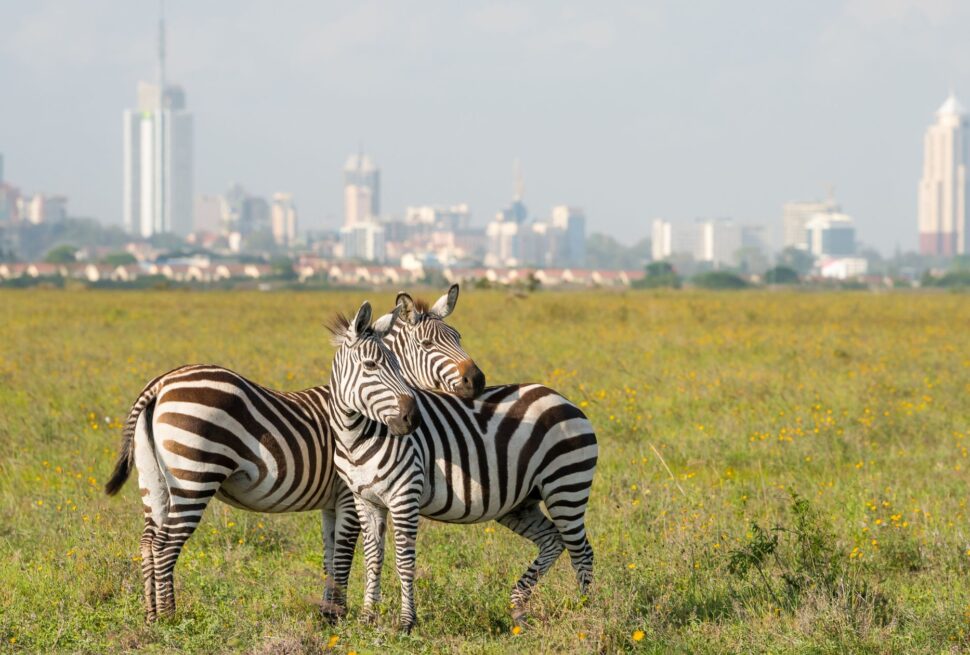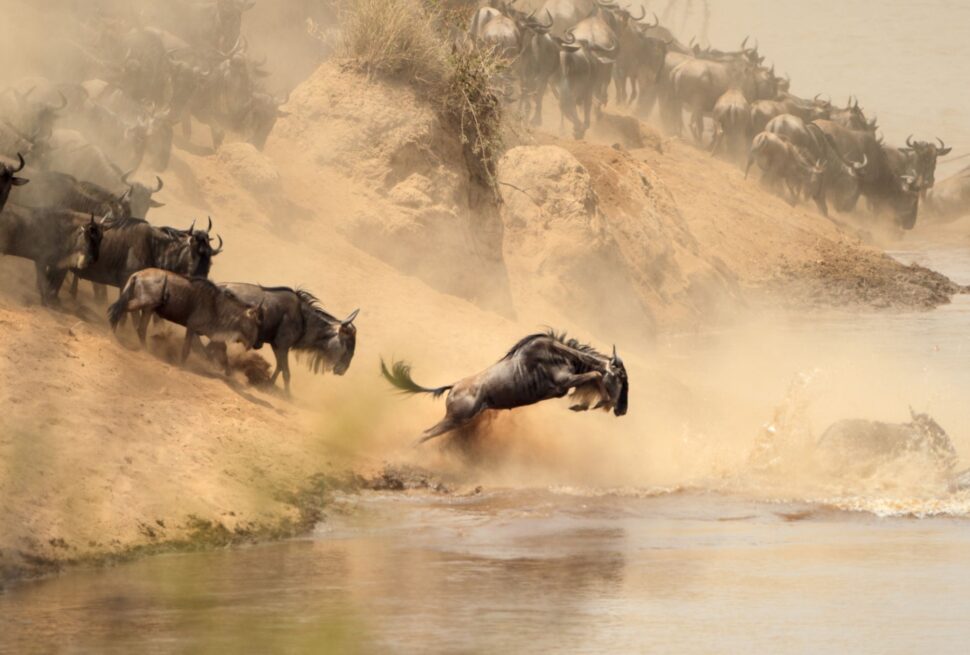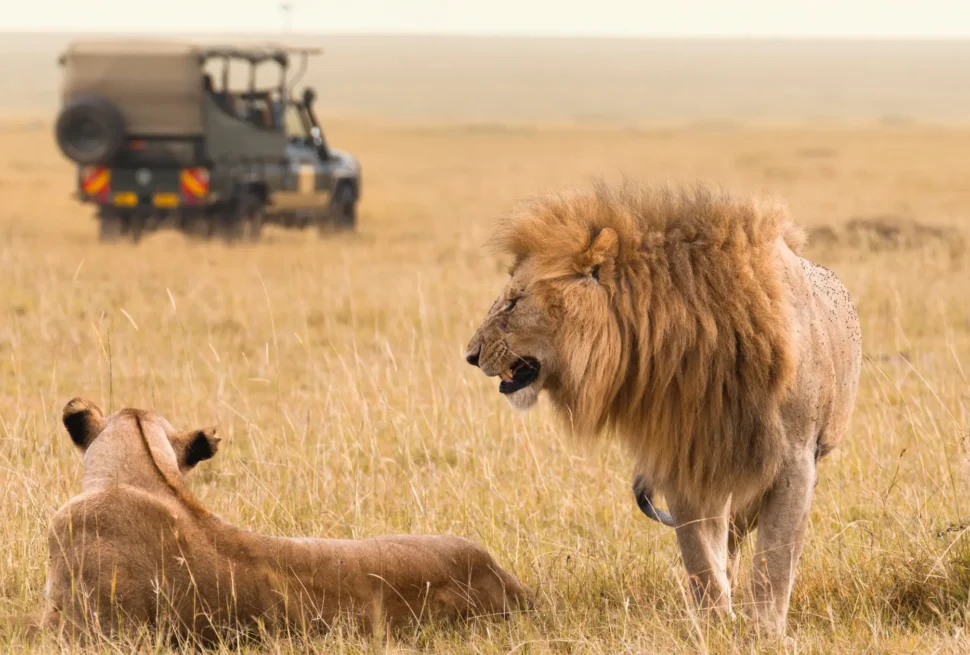
A Tsavo safari from Nairobi is one of the most underrated moves you can make when planning a Kenya trip. It is bigger than Amboseli, wilder than most of the Maasai Mara circuit, and it fits into 2, 3 or 4 days depending on how much time you have. Tsavo is split into two parks, Tsavo East and Tsavo West, separated by the Nairobi-Mombasa highway, and each has its own personality. Tsavo East is red dust and open horizon. Tsavo West is volcanic hills, natural springs and a slower, greener kind of drama.
This guide covers the routes from Nairobi, honest 2-day, 3-day and 4-day itineraries, the attractions worth building your days around, and how Tsavo compares to combining with Amboseli or continuing on to Mombasa and Diani.
Ready to start planning? Request a free Tsavo safari quote and our Nairobi-based team will build the route around your dates.
Quick Answer
Quick Answer: A Tsavo safari from Nairobi works best as a 3-day trip for most travellers, and 4 days if you want to properly cover both Tsavo East and Tsavo West. Choose Tsavo East for open plains, red elephants and classic game drives, or Tsavo West for volcanic scenery, Mzima Springs and rhino conservation. Tsavo West’s Mtito Andei Gate sits roughly 230 to 240 km from Nairobi (4 to 5 hours by road), while Tsavo East’s Voi side is closer to 300 km (5 to 6 hours). A 2-day safari is possible but rushed, and Tsavo pairs naturally with Amboseli on the way in or Mombasa and Diani on the way out.
Where Is Tsavo and Why Visit from Nairobi?
Tsavo sits southeast of Nairobi, straddling the Nairobi-Mombasa highway roughly halfway to the coast. It is actually two national parks managed separately by the Kenya Wildlife Service, Tsavo East and Tsavo West, split by the highway itself. Together they cover more than 20,000 square kilometres, making Tsavo the largest protected wilderness in Kenya by a wide margin, bigger than Maasai Mara, Amboseli and Lake Nakuru combined. That scale is exactly why it is worth the drive. Tsavo does not feel like a park you visit between other parks. It feels like its own country, and because it sits directly on the route to the coast, it is the one major Kenyan safari destination that lets you end a trip on a beach in Diani or Malindi without doubling back.
A few things worth knowing before you commit to a route:
- Tsavo East is larger, flatter and drier, known above all for its red elephants.
- Tsavo West is more scenic and rugged, with volcanic hills, lava flows and Mzima Springs.
- Both parks work for road safaris out of Nairobi and for SGR-assisted itineraries through Voi or Mtito Andei.
- Tsavo is noticeably less crowded than Maasai Mara in most sections, which matters if you have already done a busy Mara circuit or want something quieter for a second Kenya trip.
Tsavo East vs Tsavo West: Which One Should You Choose?
There is no universally correct answer here. It depends on how much time you have, what kind of scenery pulls you in, and whether wildlife density or landscape variety matters more to you.
| Feature | Tsavo East | Tsavo West |
| Best for | Open plains, red elephants, classic game drives | Scenery, Mzima Springs, lava flows, rhino conservation |
| Landscape | Dry plains, Galana River, Yatta Plateau | Volcanic hills, springs, lava fields, rocky terrain |
| Wildlife visibility | Generally easier, open terrain | Good, though thicker bush in places |
| Key attractions | Aruba Dam, Mudanda Rock, Lugard’s Falls, Galana River | Mzima Springs, Shetani Lava Flow, Chaimu Crater, Ngulia |
| Night game drives | Not permitted | Permitted, one of the few Kenyan parks that allows this |
| Best paired with | Mombasa, Diani, Tsavo West | Amboseli, Chyulu Hills, Tsavo East |
| First-timer suitability | Very good | Very good, especially for scenery lovers |
Choose Tsavo East if your priority is classic wildlife viewing across wide open country. Choose Tsavo West if you want dramatic scenery, natural springs and a more varied safari feel. Honestly, if you have four days, do not choose. Do both. The contrast between the two is part of what makes Tsavo worth the trip in the first place.
Explore our Tsavo safari packages or request a custom quote and tell us which side of Tsavo is pulling at you.
Best Routes from Nairobi to Tsavo
Route 1: Nairobi to Tsavo West via Mtito Andei
This is the route for Tsavo West safaris, Amboseli-Tsavo combinations and anyone chasing Mzima Springs and the Shetani Lava Flow. You drive along the A109 Mombasa Road, and depending on the exact gate you are entering through, the Mtito Andei Gate sits roughly 230 to 240 km from Nairobi, about 4 to 5 hours on the road with a normal stop or two. It works well as a standalone 2 or 3-day Tsavo West safari, or as the second leg of an Amboseli-Tsavo trip.
Route 2: Nairobi to Tsavo East via Voi
This is the road for Tsavo East, and for travellers who plan to continue to Mombasa or Diani afterward. You follow the same Mombasa highway further, toward Voi, which sits about 300 km from Nairobi and closer to 5 to 6 hours by road depending on traffic and where exactly you enter the park. Voi is the main gateway to the red elephants, Aruba Dam, Mudanda Rock and the Galana River.
Route 3: Nairobi to Tsavo by SGR and Safari Vehicle
The Madaraka Express inter-county service leaves Nairobi daily at 8am and stops at both Mtito Andei and Voi, which puts you within a short drive of either park without hours behind the wheel. The faster afternoon express service only stops at Voi, so if Mtito Andei is your target, you need the morning inter-county train. Your ground operator picks you up at the station and transfers you into the park. It is a real comfort upgrade for families or anyone who finds the highway drive tiring, but the itinerary has to be built around the train timetable rather than the other way around.
Route 4: Nairobi to Amboseli to Tsavo
For travellers with 4 to 6 days who want Kilimanjaro views and Tsavo’s wilderness in one trip, this is the strongest combination in southern Kenya. The typical flow is Nairobi to Amboseli, then Tsavo West, then Tsavo East, ending back in Nairobi or continuing to Mombasa. Amboseli gives you the elephant herds and Kilimanjaro backdrop, and Tsavo adds scale and a wilder, more remote feel that Amboseli, being smaller and busier near the swamps, does not quite deliver.
Route 5: Nairobi to Tsavo to Mombasa or Diani
This is the safari-and-beach route, and it is one of the best reasons to choose Tsavo over Maasai Mara if a coastal extension is part of your plan. The flow is Nairobi to Tsavo East or Tsavo West, then onward to Mombasa or Diani. Because Tsavo sits directly on the highway corridor, you are not backtracking the way you would from the Mara. It suits honeymooners and families especially well.
Not sure which route fits your dates? Contact our team and we will map it out with you.
Best Tsavo Safari Itineraries from Nairobi
2-Day Tsavo Safari from Nairobi
Best for travellers with very limited time. Stick to one park, Tsavo West or Tsavo East, rather than trying to squeeze both in.
- Day 1: Depart Nairobi early, drive to Tsavo, afternoon game drive, overnight at a lodge or camp.
- Day 2: Early morning game drive, breakfast, a short final drive or scenic stop, then return to Nairobi or continue toward Mombasa.
Two days is possible, but it is not the itinerary to pick if long road transfers wear you out. You will spend a meaningful chunk of your trip in the vehicle relative to time in the park.
3-Day Tsavo Safari from Nairobi
Best for most travellers, and the option we recommend as the default. Within this window you have a few solid choices: a 3-day Tsavo East safari, a 3-day Tsavo West safari, a combined 3-day Tsavo East and West trip, or a 3-day Nairobi-to-Tsavo-to-Mombasa route.
- Day 1: Nairobi to Tsavo, afternoon game drive.
- Day 2: Full-day game drives, or a morning and afternoon split if you are covering ground within one park.
- Day 3: Sunrise game drive, breakfast, return to Nairobi or continue to the coast.
This is the best balance of travel time, wildlife viewing and cost for a first Tsavo trip.
4-Day Tsavo East and Tsavo West Safari from Nairobi
Best for travellers who want both parks without rushing through either.
- Day 1: Nairobi to Tsavo West, afternoon game drive.
- Day 2: Explore Tsavo West: Mzima Springs, the Shetani Lava Flow, and the Ngulia area if it is on your route.
- Day 3: Transfer to Tsavo East, game drive around Aruba Dam, Mudanda Rock or the Galana River region.
- Day 4: Early morning game drive, return to Nairobi or continue to Mombasa or Diani.
5-Day Amboseli and Tsavo Safari from Nairobi
Best for first-time visitors who want Kilimanjaro views alongside Tsavo’s wilderness. The route runs Nairobi to Amboseli to Tsavo West to Tsavo East, ending in Nairobi or at the coast. Amboseli delivers the classic elephant-and-Kilimanjaro photograph, and Tsavo adds the scale and remoteness that make the whole trip feel less like a checklist and more like an actual journey through southern Kenya.
Planning your Tsavo route? Request a custom quote with your travel dates and group size and we will build the itinerary around them.
Top Attractions to See on a Tsavo Safari
Tsavo East Highlights
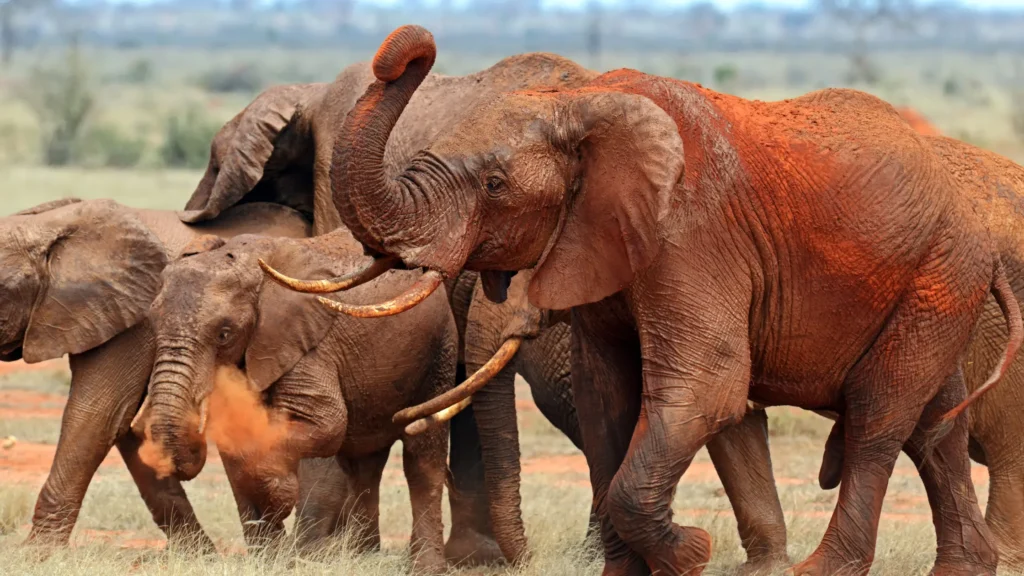
- Red elephants. Tsavo’s elephants dust themselves in the park’s iron-rich soil, which stains their skin a deep rust colour. It is one of the most photographed sights in Kenyan safari, and it is not something you see quite the same way anywhere else.
- Aruba Dam. Built across the Voi River in 1952, this reservoir draws in lions, elephants and waterbuck, especially in drier months.
- Mudanda Rock. A 1.6 km whale-shaped inselberg that acts as a natural water catchment. Hundreds of elephants gather at the pools below during dry season.
- Lugard’s Falls. Despite the name, this is not a vertical waterfall but a stretch of white-water rapids on the Galana River, where the current has carved smooth grooves into black rock over thousands of years.
- Yatta Plateau. The remains of the world’s longest lava flow, running close to 290 km along the park’s western edge.
Tsavo West Highlights
- Mzima Springs. Crystal-clear pools fed by volcanic filtration from the Chyulu Hills, home to hippos, Nile crocodiles and an underwater viewing chamber where you can watch them glide past a few feet away.
- Shetani Lava Flow. A black volcanic field roughly 8 km long, formed by an eruption within the last 500 years. The name means “devil” in Swahili.
- Chaimu Crater. A short, climbable volcanic cone with views across the park.
- Ngulia Rhino Sanctuary. Worth knowing about: in December 2025, Kenya opened a dramatically expanded version of this sanctuary, growing it from a fenced 92 sq km enclosure to a 3,200 sq km protected landscape, combining populations to found roughly 200 black rhinos. It is now described as the largest black rhino sanctuary in the world, and it barely registers on most competing Tsavo guides yet.
Wildlife You May See
Elephants, lions, buffalo, giraffes, zebras, hippos, crocodiles, antelope species including the long-necked gerenuk, and more than 500 recorded bird species across the two parks. Leopards and rhinos are possible but never guaranteed, and sightings depend on season, route and your guide’s experience. Tsavo East’s lions are also known for rarely growing full manes, a quirk unique to this population.
How Many Days Do You Need for a Tsavo Safari from Nairobi?
| Duration | Best For | Recommendation |
| 1 day | Not recommended from Nairobi | Too rushed given the distance |
| 2 days | Short-safari travellers | Possible, but fast-paced |
| 3 days | Most travellers | Best overall balance |
| 4 days | Tsavo East and Tsavo West | Best for covering both parks properly |
| 5+ days | Amboseli, Tsavo and the coast | Best for a full southern Kenya circuit |
For most travellers, 3 days is the sweet spot. If you want both Tsavo East and Tsavo West without feeling rushed, plan for 4. A 2-day safari only works if you are at ease with long hours on the road in exchange for a shorter window in the park.
Best Time to Visit Tsavo from Nairobi

Tsavo can be visited year-round, but wildlife visibility is generally easier in drier months when animals concentrate around permanent water sources and vegetation thins out.
- June to October: Dry season, excellent wildlife viewing, the most popular travel window.
- January to March: Warm and dry, a strong and often underrated choice.
- April to May: Long rains. Fewer crowds and greener landscapes, though some roads can be harder going.
- November to December: Short rains. Scenic and still very safari-worthy, with lighter crowds than peak season.
Photography can actually be at its best just after rains, when the light is clearer and the dust settles, but overall visibility tends to be easiest in the dry months. If you are also weighing this against a Maasai Mara trip, our guide on the best time to visit Maasai Mara breaks down that park’s very different seasonal rhythm, driven largely by the Great Migration rather than Tsavo’s simpler wet-dry pattern.
Is Tsavo Good for First-Time Safari Travellers?
Yes, particularly if you want a less crowded, more scenic introduction to Kenya. Tsavo offers strong elephant sightings and suits travellers who prefer wide-open wilderness over Maasai Mara’s denser wildlife concentration. That said, if predator sightings and migration-season drama are your top priority, Maasai Mara may still be the stronger pick; our Great Migration guide explains why that circuit runs on a different calendar.
| Traveller Type | Is Tsavo a Good Fit? |
| First-time safari traveller | Yes |
| Elephant lover | Yes |
| Photographer | Yes |
| Family traveller | Yes, with a realistic pace |
| Big cat-focused traveller | Good, though Maasai Mara may be stronger |
| Beach and safari traveller | Excellent |
Road Safari vs SGR Safari vs Flying Safari
Road Safari from Nairobi
Flexible and door-to-door, with your vehicle staying with you throughout so you can stop along the way. The trade-off is longer hours in the vehicle, especially on a 2-day itinerary.
SGR Safari from Nairobi
The Madaraka Express inter-county train serves both Voi and Mtito Andei, and a safari vehicle collects you on arrival. Less flexible since your schedule has to work around the train timetable, but a real comfort win, and good for families or anyone connecting onward to the coast.
Flying Safari
Charter and scheduled flights from Nairobi’s Wilson Airport reach airstrips near both parks in under an hour. It costs considerably more and luggage limits apply, so it suits luxury travellers or those short on time rather than being the default choice.
For most Imela Tours guests, a private road safari or an SGR-assisted trip is the most practical option, with flying kept as a premium upgrade.
Where to Stay on a Tsavo Safari
Budget and Midrange Camps and Lodges
Best for budget-conscious travellers, families and shorter safaris. Both parks have a good spread of options near the main gates and along the Galana and Voi river systems.
Luxury Lodges and Tented Camps
Best for honeymooners, photographers and travellers who want a slower, more exclusive pace. If a wider luxury Kenya safari is on your radar, our luxury safari guide covers the top lodges across the country.
When choosing where to stay, weigh which park you are focused on, distance from the gate, meal plan, and whether the trip continues to Nairobi or Mombasa afterward. That last point matters more here than in most parks, since your accommodation choice can set you up well for a coastal extension or add unnecessary backtracking.
What to Pack for a Tsavo Safari from Nairobi
Light, neutral-coloured clothing, a warm layer for early mornings, comfortable closed shoes, sunscreen, a hat, sunglasses, insect repellent, a reusable water bottle, camera and binoculars, a power bank, personal medication, your passport or ID, and a small day bag. Tsavo runs warm and dry for most of the year, but game drives before sunrise can catch you off guard, so do not skip the layer. For a fuller breakdown that applies across any Kenya safari, our safari packing list covers what to bring in more detail.
Practical Travel Tips for a Better Tsavo Safari
- Leave Nairobi early to maximise your first day of game viewing.
- Choose 3 days if your schedule allows it.
- Do not try to cover both parks in 2 days unless you are fully prepared for a rushed pace.
- Use a 4×4 safari vehicle, especially in Tsavo West’s rougher terrain.
- Carry enough drinking water for the drive.
- Confirm current park fees before travel, since KWS rates are revised periodically.
- Book accommodation early if you are travelling in peak season, June to October.
- Carry your passport or ID for park entry.
- Respect park rules and keep a safe distance from wildlife.
- Consider ending your trip in Mombasa or Diani if a beach extension appeals to you.
Recommended Tsavo Safari Packages from Nairobi
2-Day Tsavo Safari from Nairobi. Best for short-stay travellers who still want a genuine taste of the park.
3-Day Tsavo East Safari. Best for red elephants, open plains and classic game drives.
3-Day Tsavo West Safari. Best for Mzima Springs, lava flows and scenic landscapes.
4-Day Tsavo East and Tsavo West Safari. Best for travellers who want both parks properly covered.
5-Day Amboseli and Tsavo Safari. Best for a complete southern Kenya circuit with Kilimanjaro views included.
Nairobi to Tsavo to Mombasa Safari. Best for combining safari with a beach holiday.
Our 3-day Tsavo East and Tsavo West safari is a ready-built option worth a look, currently run as a coast-based departure from Mombasa or Diani, which suits Route 5 travellers well. If you want the Amboseli leg of Route 4 first, our 3-day Amboseli safari from Nairobi covers that half, and we can extend it into Tsavo as a custom add-on rather than a return to Nairobi. Our full Kenya safari packages from Nairobi guide is a good starting point if you are still comparing circuits.
Planning a Tsavo safari from Nairobi? Imela Tours & Travel can customise your route, accommodation, vehicle type and ending point, whether you want to return to Nairobi, continue to Mombasa, or combine Tsavo with Amboseli. Request a custom Tsavo quote and we will come back to you within 24 hours with a personalised itinerary.
Is a Tsavo Safari from Nairobi Worth It?
Yes. Tsavo is not simply a fallback for when Maasai Mara feels overbooked. It offers a different kind of safari, one built on scale rather than density: bigger landscapes, red-earth scenery, a sharp contrast between its two halves, and fewer crowds in most sections. If your Kenya trip includes a coastal extension, Tsavo is arguably the single best safari choice for that route, since nowhere else lets you go straight from game drives to the beach without backtracking.
Final Thoughts: Building Your Tsavo Route
Tsavo rewards travellers who give it a proper 3 or 4 days rather than treating it as a quick stop between Nairobi and the coast. A few things worth carrying forward as you plan:
- Three days is the best default for most travellers; four if you want both parks.
- Tsavo East suits open-plains, red-elephant, classic-safari lovers. Tsavo West suits scenery, springs and volcanic landscape lovers.
- The SGR is a real alternative to the full highway drive, provided you plan around the train schedule.
- Tsavo is one of the strongest safari-and-beach combinations in Kenya, precisely because it sits on the route rather than off it.
Ready to plan your Tsavo safari from Nairobi? Share your travel dates, group size and preferred route, and Imela Tours & Travel will help you build a smooth, private itinerary that fits your time and your budget. Start with a free quote.
Frequently Asked Questions
How far is Tsavo from Nairobi?
Tsavo sits southeast of Nairobi along the Nairobi-Mombasa corridor. The exact distance depends on which side you are entering: roughly 230 to 240 km to Tsavo West’s Mtito Andei Gate, or around 300 km to reach Tsavo East via Voi.
Can you do a one-day Tsavo safari from Nairobi?
It is not recommended. The drive is too long relative to the time you would spend actually viewing wildlife. Two days is the practical minimum, and 3 days is considerably better.
Is Tsavo East or Tsavo West better?
Neither is universally better. Tsavo East wins for open plains, red elephants and classic game drives. Tsavo West wins for scenery, Mzima Springs, volcanic landscapes and rhino-focused conservation, including the newly expanded Ngulia Rhino Sanctuary.
How many days are enough for Tsavo?
Three days works well for most travellers. Four days is better if you want to properly cover both Tsavo East and Tsavo West rather than rushing between them.
Can I travel from Nairobi to Tsavo by SGR?
Yes. The Madaraka Express inter-county service stops at both Mtito Andei and Voi, which puts you close to Tsavo West and Tsavo East respectively. You will still need a safari vehicle to complete the transfer into the park.
What animals can I see in Tsavo?
Elephants, lions, buffalo, giraffes, zebras, hippos, crocodiles, antelope and rich birdlife across both parks. Leopards and rhinos are possible with luck, particularly around Ngulia in Tsavo West, though sightings are never guaranteed.
Is Tsavo good for families?
Yes, especially with a realistic pace that avoids rushing. Comfortable lodges, sensible drive times and built-in breaks make a real difference for family groups.
Can I combine Tsavo with Mombasa or Diani?
Yes, and it is one of the best reasons to choose Tsavo in the first place. Because it sits directly along the Nairobi-Mombasa corridor, you can safari through Tsavo and continue straight to the coast without doubling back.
What is the best time to visit Tsavo?
Tsavo is a year-round destination, but the dry months, June to October and January to March, tend to offer the easiest wildlife viewing as animals gather around permanent water.
Is Tsavo cheaper than Maasai Mara?
It can be, depending on season, accommodation tier, transport choice and group size. Park entry into Tsavo runs around $80 per non-resident adult per 24 hours as of the current Kenya Wildlife Service tariff, with no seasonal surcharge, unlike Maasai Mara’s higher July to December rate. Always confirm current fees directly with Kenya Wildlife Service before travel, since rates are periodically revised. If you want the full cost picture across a Kenya trip, our Kenya safari cost guide breaks it down park by park.
Park fees, SGR schedules and conservation figures referenced above are correct as of mid-2026. Always confirm current rates and train times through Kenya Wildlife Service, the Kenya eTA portal for visa requirements, and the official Kenya Railways booking portal for Madaraka Express tickets before you travel.
Related Reading from Imela Tours & Travel: